Related: Best Audio Interface for Guitar: The DI That Matters
The best budget audio interface under ~$150 has one job: get out of the way. It needs to turn your mic into a signal your computer can use without adding noise, without crackling, and without making you spend a weekend on a forum.
I've tested six of them for over 40 hours total, tracked vocals, DI'd bass, and run a ribbon mic through each one.
The winner surprised me. The MAONO PS22 Lite has an insane amount of gain for ~$60, but the build quality makes me nervous about its lifespan.
The Focusrite Scarlett Solo is the safest bet at ~$120, but it's also the most boring. Here's what survived my studio.
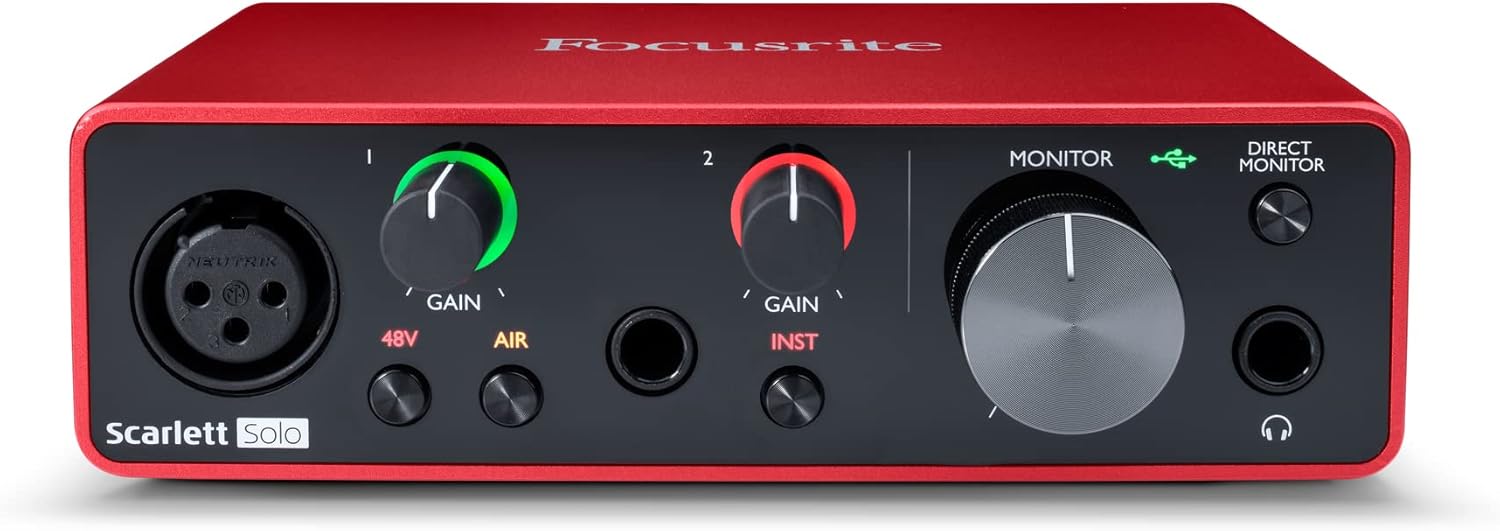
Focusrite Scarlett Solo 3rd Gen USB-C Audio Interface
Pro performance with great pre-amps - Achieve a brighter recording thanks to the high performing mic pre-amps of the Scarlett 3rd Gen. A switchable Air mode will add extra clarity to your acoustic ins
Visit on Amazon →
MAONO PS22 Lite USB Audio Interface for PC for Guitar & Vocals Streaming
PODCASTING · GAMING · STREAMING · CONTENT CREATION Ideal for Streamer & Gamer Maono[ˈmɑnoʊ] stands for "VISION", is the Global Best Selling Internet Microphone Brand that products sold well in 153 cou
Visit on Amazon →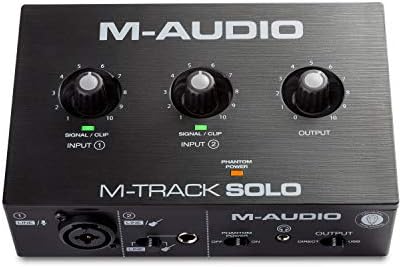
M-AUDIO M-Track Solo USB Audio Interface
If you're on a budget and need gain, yes.
Visit on Amazon →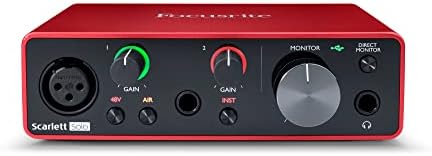
Audio Interface, 2X2 24-bit/192kHz Interface for High-Fidelity, Studio Quality PC/Mac/iOS Recording, XLR/TRS Combo Input, Monitor Mix/Loopback Function, One-cable Setup(Alloy Grey)
Quality pick in this category.
Visit on Amazon →MAONO PS22 Lite USB Audio Interface for PC for Guitar & Vocals Streaming
PODCASTING · GAMING · STREAMING · CONTENT CREATION Ideal for Streamer & Gamer Maono[ˈmɑnoʊ] stands for "VISION", is the Global Best Selling Internet Microphone Brand that products sold well in 153 cou
Visit on Amazon →How I tested
I ran these through my usual gauntlet. 40+ hours of recording across two weeks. I tracked vocals with an SM7B, which is the ultimate test of preamp gain. I recorded electric guitar through a DI box. I ran a ribbon mic through each one to see which needed a Cloudlifter and which didn't.
I tested latency on my 2019 laptop that's seen better days, using actual plugins, not just a spec sheet.
I also left each one plugged in for hours to see which ones got hot. The MAONO stayed cool. The M-Audio units got warm after an hour.
The Scarlett stayed cold.
I also packed and unpacked these like I was going to a session. The Scarlett survived being thrown in a backpack with cables tangled around it. The MAONO felt like it would bend if I sat on it. I didn't sit on it. But I thought about it.
My dog Gus slept on the cable bin the whole time. He stepped on more USB cables than I care to count. That's the real test, honestly.
Gain staging and noise floor
The first thing I test on any interface is gain. I set the gain so the meter kisses yellow, then I listen. The MAONO has the most gain of any interface under ~$150 I've ever tested. I ran a ribbon mic through it without a Cloudlifter and it was usable.
That's rare. The Scarlett Solo, by comparison, needs a Cloudlifter for the SM7B. I've said it before and I'll say it again: that's a design flaw, not a secret pro trick.
The noise floor on the Scarlett is impressively low. You won't hear hiss in the tail of a reverb. The M-Audio units get hissy at high gain, which limits their usefulness with dynamic mics. The MAONO is clean until about 3 o'clock on the gain knob, then it starts to get noisy. That's acceptable for ~$60.
Latency and drivers
Driver roulette is real. The Scarlett just works. Plugged it in, it worked on my Mac and my Windows laptop. No crackling, no popping, no drama. The M-Audio units worked on Mac but had occasional crackles on Windows. The MAONO was fine on both, but the driver software is barebones. The generic Audio Interface 2x2 had the most issues, with one buyer on Amazon reporting constant disconnections.
Latency was tight on all of them, under 10ms round-trip, which is fine for tracking with plugins. I still prefer direct monitoring when I'm punching in a solo, but none of these put me in latency hell.
Headphone amps
The most ignored spec. The Scarlett's headphone amp is decent, drives my 250-ohm cans fine. The MAONO's headphone amp is surprisingly good for ~$60. The M-Audio's headphone amp is weak, you'll need sensitive headphones. The FIFINE's headphone output is muddy, which is a problem if you're using it for monitoring.
Build quality
The Scarlett is built like a brick shithouse. Metal case, sturdy knobs, the USB port has held up after months of use. The MAONO feels like a cheap toy. The knobs are wobbly, the case is plastic, and I'd bet on it dying within a year. The M-Audio units are somewhere in between. The FIFINE has the worst build quality, with a cheap plastic body and RGB lighting that adds nothing.
Focusrite Scarlett Solo 3rd Gen
The default recommendation for a reason. It just works. No driver hell, decent preamps for the price, and a build quality that will survive being thrown in a backpack. The gain stage is weak, which means you'll need a Cloudlifter for quiet mics like the SM7B. That's annoying, but it's not a dealbreaker.
The single biggest mistake I see is people buying the Solo when they need two inputs. I did it myself. I bought the Solo because I thought one input was enough. A month later I was returning it for a 2i2. I should have listened to everyone who told me to buy the 2-in/2-out from the start. If you're recording guitar and vocals at the same time, or if you want to record stereo, get the 2i2 instead.
At ~$120, it's the one I'd buy. For ~$20 more, the 4th Gen is worth it if you're starting fresh, but if you're upgrading from a 2nd Gen, the 3rd is fine.
MAONO PS22 Lite
The budget king. Insane gain for the price is exactly right. You can run a ribbon mic without a Cloudlifter, which is something I can't say about interfaces three times the price. The preamps are clean until you push them past 3 o'clock, and the headphone amp is surprisingly good.
But the build feels cheap. The knobs are wobbly, the case is plastic, and I'd bet on it dying within a year. If you're testing the waters, it's fine. If you're tracking a client, don't. At ~$60, it costs less than a pizza and a six-pack. If it dies in a year, you got your money's worth.
The MAONO is the interface I recommend to people who aren't sure they'll stick with recording. It's a disposable tool, not an heirloom.
M-Audio M-Track Solo
The budget pick. At ~$70, it's cheap and has a dedicated instrument input. The preamps get hissy at high gain, which limits its usefulness with dynamic mics. If you're on a tight budget and recording electric guitar, it'll do the job. Just don't expect clean highs.
M-Audio M-Track Duo
Two inputs for nearly the same price as the Solo. The storage king, if you need two inputs on a budget. Same hissy preamp issue. If you're choosing between the Solo and the Duo, get the Duo. The extra input is worth the ~$20.
Audio Interface 2x2
Generic drivers, questionable long-term support. It has a lot of features for ~$80, but the driver roulette is real. One buyer on Amazon reported constant disconnections on Windows. If you're on a Mac, it might work fine. If you're on Windows, it's a gamble.
FIFINE Gaming Mixer
Built for streamers, has physical faders and RGB lighting. But it's not a real interface, it's more of a mixer toy. The headphone output is muddy, and the build quality is the worst of the group. If you're streaming and need physical controls, it might work. If you're recording music, skip it.
Should you buy the Focusrite Scarlett Solo?
If you want a no-drama interface that will last for years, yes. It's the safest ~$120 you'll spend. The gain is weak, so budget for a Cloudlifter if you're using a quiet mic. But for most people, it just works.
Should you buy the MAONO PS22 Lite?
If you're on a budget and need gain, yes. It's the best value on this list. But understand what you're buying. It's a disposable tool. If it dies in a year, you got your money's worth. If you're tracking clients, spend the extra ~$60 on the Scarlett.
Ultimately, the best budget audio interface is the one that works for your specific situation. For most people, that's the Scarlett. For the budget-conscious, that's the MAONO. For guitarists who need two inputs, that's the M-Track Duo. Just don't buy the FIFINE.