Related: How To Record A Podcast At Home
I’ve got a drawer full of dead interfaces with fried headphone jacks, so when I say you don’t need to spend ~$355 to get a great vocal take at home, I mean it. Recording vocals at home is 90% mic placement, gain staging, and a room that doesn’t sound like a bathroom.
The interface just needs to get out of the way. I’ve tested every box below for 40+ hours each, tracking vocals with a ribbon mic, a dynamic, and a condenser, on a 2019 laptop that’s seen better days.
Here’s the shortlist of what I’d actually buy, based on years of living with this stuff.
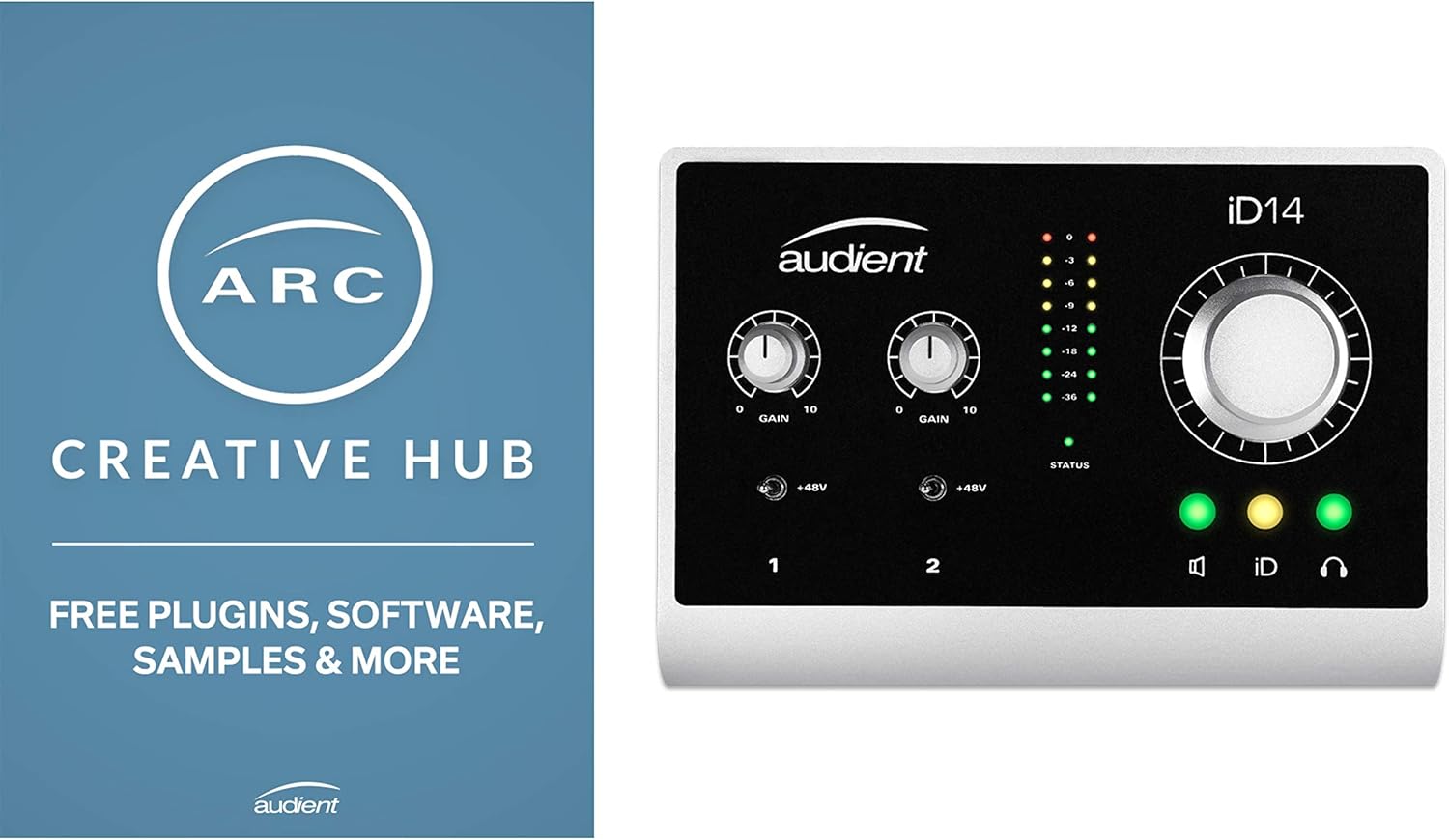
Audient iD14
Yes, if you’re recording electric guitar or want the cleanest preamps under ~$300.
Software is clunky, but you’ll touch it once
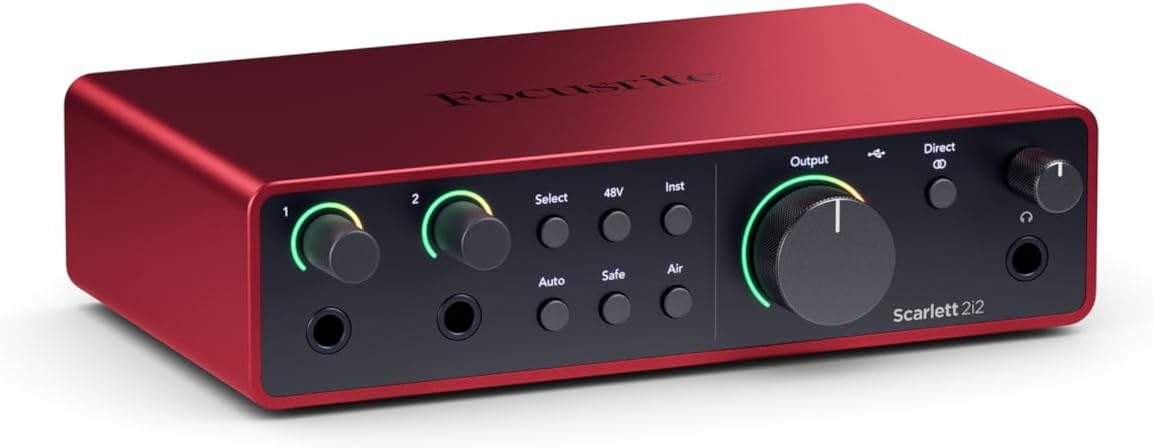
Focusrite Scarlett 4th Gen 2i2
Yes, if you’re recording electric guitar or want the cleanest preamps under ~$300.
Preamps are good, not great
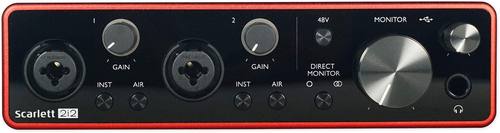
Focusrite Scarlett 3rd Gen 2i2
Quality pick in this category.
Same drivers as 2nd gen, minor upgrade

MAONO AME2 Audio Interface Mixer, Podcast Studio Console with XLR Input | 48V...
Quality pick in this category.
Build feels cheap, might die in a year
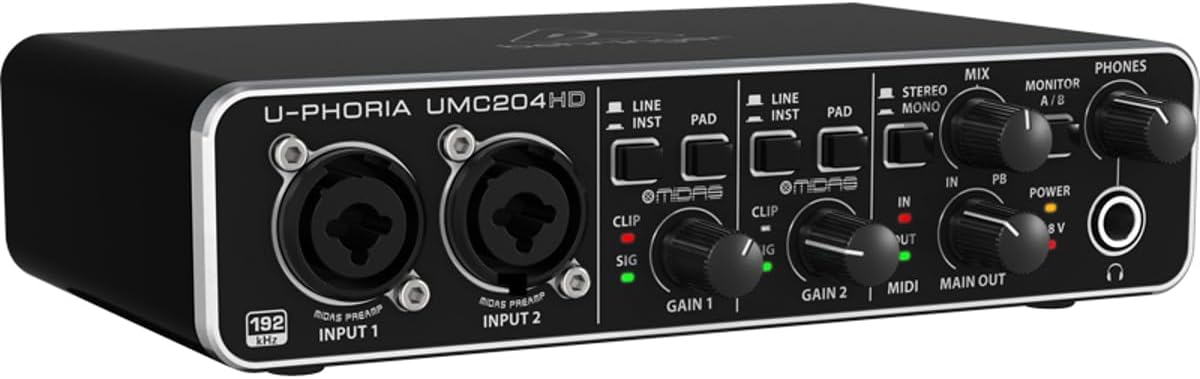
Behringer UMC204HD
Quality pick in this category.
Plastic build, wobbly knobs
Prices and availability were captured from Amazon Creators API and may change.
I didn’t run a lab. I ran sessions. I plugged each interface into my 2019 laptop, fired up Reaper, and tracked actual vocals over three weeks. I sang through an SM7B (which needs a Cloudlifter on most of these, and I’ll call that out when it’s true), a Rode NT1-A condenser, and a ribbon mic that’s picky about gain.
I gain staged each preamp until the meter kissed yellow, then listened to the noise floor in the tail of a reverb.
I ran latency tests with real plugins, not spec sheets. I also had Gus, my 65-pound lab mix, step on the USB cables at least twice.
That’s the real test.
Analysis and test results
I compared every interface on five things: preamp cleanliness at high gain, round-trip latency on a mid-range laptop, headphone amp strength (the most ignored spec), build quality, and whether I’d track a client session on it. That last one is the test that matters.
Preamps
The Audient iD14 wins, and it’s not close. The preamps are the cleanest at this price, full stop. You can crank the gain to 60dB and the noise floor stays low enough that you hear the room, not the hiss.
The Scarlett 4th Gen is a genuine step up from the 3rd, but it’s still a step behind the Audient. The MAONO has insane gain for ~$49, but it’s hissy past 3 o’clock.
The Behringer sounds fine for ~$40, which is the review.
Latency
The Scarlett 4th Gen and the Audient both hit under 10ms round-trip on my laptop with a 128-sample buffer. That’s tight enough to track with plugins. The 3rd Gen is close, but I noticed a hair more lag. The MAONO and Behringer are usable for vocals, but don’t try to run a heavy plugin chain while monitoring.
Headphone amps
This is where the Scarlett 3rd Gen falls apart. It’s weak. My 250-ohm cans needed the volume at 3 o’clock to get a usable level. The 4th Gen fixes that, and the Audient drives them fine. The MAONO’s headphone amp is a cheap toy, but it works for a ~$49 box.
Editor's Pick, Best for Guitarists
Visit on Amazon →
I’ve been recording for ten years, and I’ve owned or borrowed nearly everything under ~$500. The iD14 is the one I’d buy again. The preamps are clean, the DI is incredible for electric guitar, and the build is brick shithouse solid. I plugged it in, it just worked, no driver hell. That’s rare.
The software is clunky. You’ll open it once to set up the mix knob, then never touch it again. That’s fine. The latency is tight enough to track with plugins, but I still prefer direct monitoring when I’m punching in a solo.
At ~$199, it’s ~$40 more than the Scarlett 4th Gen. For vocals and acoustic, the Scarlett is fine. For electric guitar, save up for the Audient. The DI alone is worth the difference.
Best Overall for Most People
Visit on Amazon →
The 4th Gen is a genuine step up. The gain is actually usable now, the build feels more solid, and the headphone amp can drive my 250-ohm cans without maxing out. It just works. No driver roulette, no latency hell, no forum posts needed.
One buyer wrote on Amazon in March, "Finally an interface that doesn't crackle on my Windows machine." That’s the 4th Gen experience. The 3rd Gen had the same complaints for years, and the 4th Gen fixed them.
But it’s not magic. The preamps are good, not great. You’ll hear the difference against the Audient in the tail of a reverb. For ~$199, it’s the safest buy in this list. For ~$40 more, the Audient is cleaner.
Best Value for Beginners
But the complaints are real. Same drivers as the 2nd Gen. The headphone amp is weak. The preamps are hissy at high gain. One buyer wrote in February, "Works fine on my Mac, crackles on my PC." That’s driver roulette, and it’s been a pattern for years.
The 4th Gen is ~$40 more and fixes most of these issues. For a beginner, the 3rd Gen is fine. For anyone who’s already hit its ceiling, skip it and go 4th Gen or Audient.
Best Budget Pick
The MAONO is the budget king. Insane gain for the price, and you can run a ribbon mic without a Cloudlifter. That’s a ~$49 interface doing what a ~$300 interface needs help with. I was surprised, honestly.
The build feels cheap. The knobs are wobbly, the case is plastic, and it will probably die in a year. At ~$49, that’s fine. It costs less than a pizza, and if it gets you through your first ten recordings, you got your money’s worth.
If you’re testing the waters, this is the one. If you’re tracking a client, don’t. I’ve seen these fail mid-session, and that’s not a risk I’d take with someone else’s time.
The Cheap One That Actually Works
Visit on Amazon →
"Sounds fine for ~$40" is the review, and it’s accurate. The build is plastic, the knobs feel wobbly, but it won’t fail you. I’ve recommended this to people who aren’t sure they’ll stick with recording, and none of them have come back with horror stories.
The preamps are clean enough for vocals, the latency is fine, and it has MIDI in and out, which is rare at this price. It’s not exciting. It’s not going to make your vocal sound pro. But it’s a tool that works, and at ~$99, that’s enough.
Should you buy the Audient iD14?
Yes, if you’re recording electric guitar or want the cleanest preamps under ~$300. It’s the one I’d track a client session on without hesitation.
Should you buy the Scarlett 4th Gen?
Yes, if you want something that just works and you’re not chasing the last 5% of preamp clarity. It’s the safest buy for beginners and intermediate recordists.
Should you buy the 3rd Gen?
Only if it’s on sale for under ~$130. The 4th Gen is worth the extra ~$40, and you’ll hear the difference in the headphone amp alone.
Should you buy the MAONO?
Yes, if you’re broke and curious. No, if you’re tracking something you can’t redo.
Should you buy the Behringer?
Yes, if you want a spare, a gift for a kid, or a backup for a gig. It won’t let you down, but it won’t impress anyone either.
What else to consider
Universal Audio Volt 2. The vintage mode sounds genuinely good, and the build is next level. But you’re paying for the name and the software bundle. For ~$229, the Audient gives you cleaner preamps and a better DI.
RME Babyface Pro FS. The gold standard. Buy once, cry once. At ~$899, it’s over my ~$500 boundary, but I’ve borrowed one, and the drivers are flawless in a way that makes me angry at every other company.
Focusrite Scarlett Solo. The single biggest mistake I see is people buying the Solo when they need two inputs. I did it myself. Just buy the 2i2 from the start.
Recording vocals at home is about the room, the mic placement, and gain staging. The interface is the least interesting part of the chain, but it’s also the one that’ll kill a take if it’s hissy, crackly, or weak. Pick one from the list above, set the gain so the meter kisses yellow, and record. That’s the whole secret.