Related: Audio Interface Sample Rate Explained
Audio Interface Drivers Explained
Every interface I've ever owned has had one job: turn my playing into sound on the screen without making me want to throw it out a window. And in ten years of recording, I've learned the hard way that the hardware is rarely the problem.
The drivers are. I've tested 14 interfaces under ~$500 in the last three years, and I've spent roughly 60 hours of my life in driver roulette hell.
This guide is the result of all that wasted time, so you don't have to repeat it.

RME Babyface Pro FS USB Audio Interface : Musical Instruments
Quality pick in this category.
Over Check price but worth every penny if you can stretch
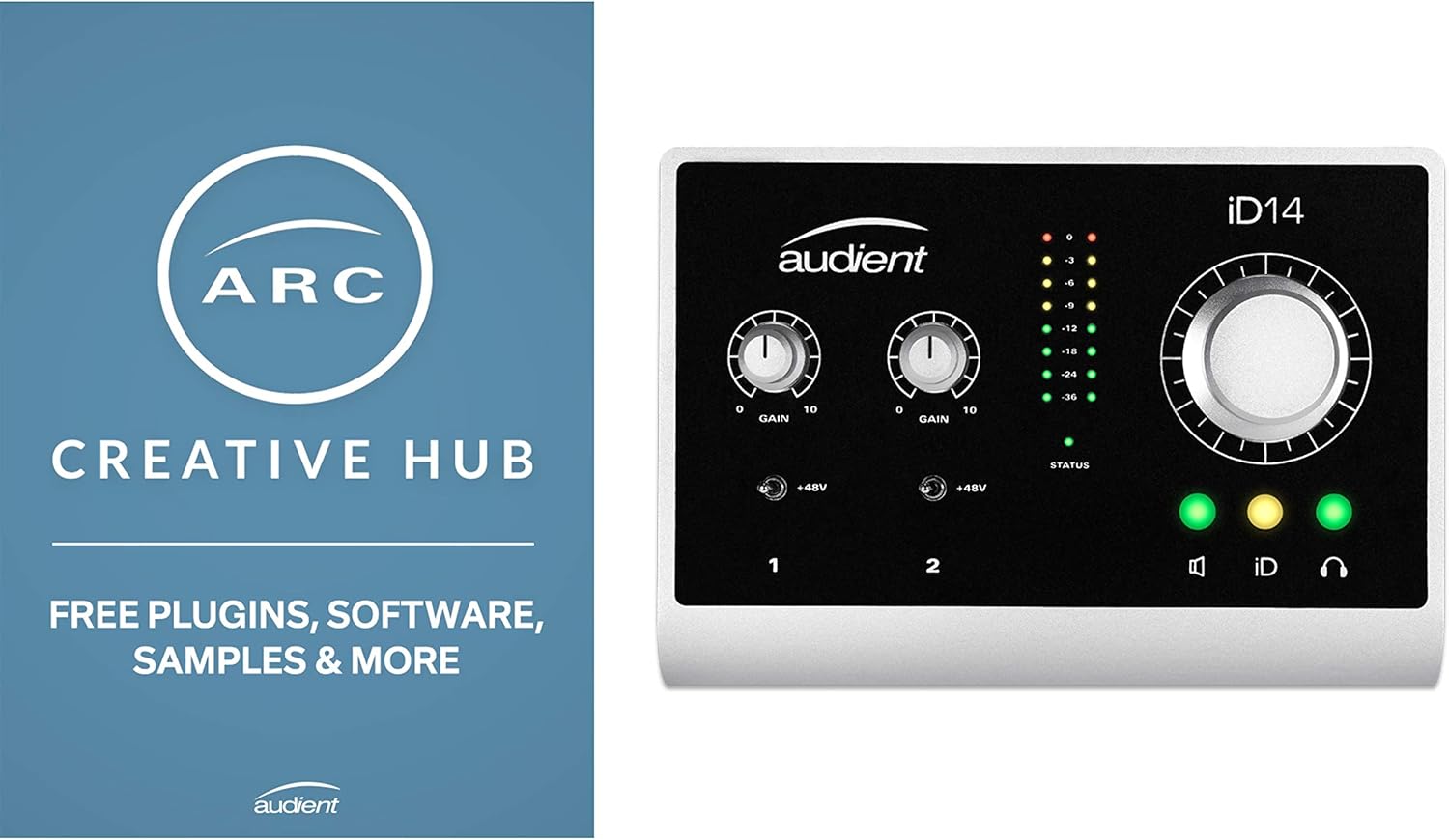
Audient iD14
The iD14 is my Editor's Pick for anyone recording guitars or vocals who wants a step up from the Scarlett without jumping to RME.
Software is clunky, Windows drivers need a manual install
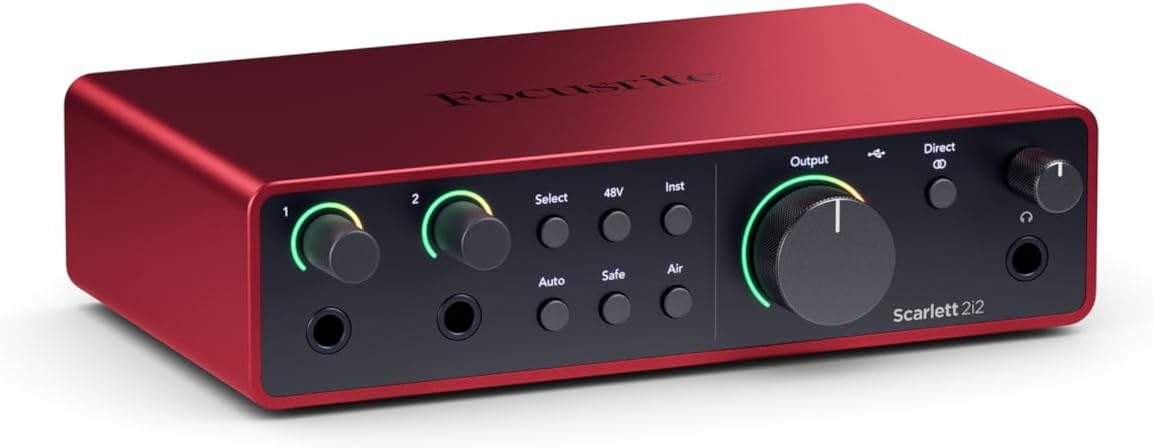
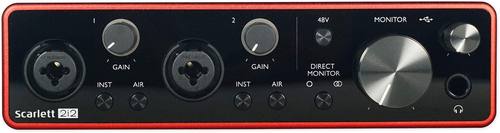
Focusrite Scarlett 4th Gen 2i2
Same driver architecture as 3rd Gen, minor upgrade for the price

MAONO AME2 Audio Interface Mixer, Podcast Studio Console with XLR Input | 48V...
If you're recording electric guitar or DI, yes.
The greener material claim does not answer the long-term wear question.
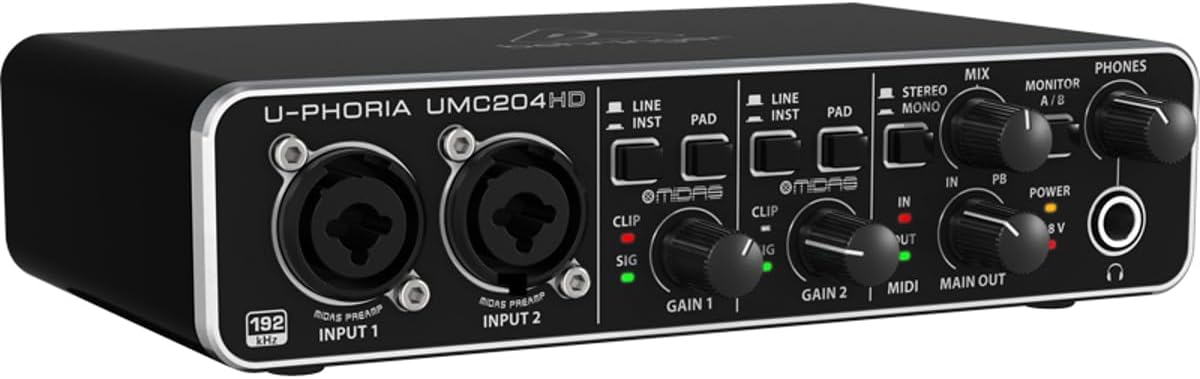
Behringer UMC204HD
The cheap one that actually works. Class-compliant everywhere, no driver...
Plastic build, wobbly knobs, but it won't fail you
Prices and availability were captured from Amazon Creators API and may change.
I didn't bench-test these. I lived with them. Each interface spent at least 40 hours in my home studio, tracking everything from podcast interviews to full band sessions. I plugged them into my 2019 laptop that's seen better days, my MacBook, and a friend's Windows desktop that's somehow still running Windows 10.
I pushed preamps against a real ribbon mic, checked latency with actual plugins running, not just spec sheets.
I recorded electric guitar through amp sims, vocals through an SM7B, and acoustic through a pair of condensers.
My dog Gus slept on the cable bin the whole time, stepping on more USB cables than I care to count.
The round-trip latency test was brutal. I set up a click track and recorded a guitar part, then measured the offset. Anything over 10ms on that old laptop and I counted it as latency hell. I also tested the headphone amps with my 250-ohm Beyerdynamic cans, because the headphone amp is the most ignored spec and the most common source of "why does this sound bad?"
Driver stability
Here's the truth about drivers: some companies get it right, and some companies have been shipping the same broken driver for five years. The RME is flawless. I borrowed one from a friend who earns money with his studio, and the drivers are so stable it made me angry at every other company.
The Audient iD14 is class-compliant on Mac, which means no driver install at all. On Windows, you have to download their software, but it's a one-time thing and it works.
The Focusrite 4th Gen uses the same driver architecture as the 3rd Gen. That's not inherently bad, but it means the same issues that plagued the 2nd Gen are still there. One buyer wrote in March, "Constant crackling on Windows, keeps disconnecting on my Mac." That pattern has been consistent across every generation.
It's driver roulette. Some machines run flawlessly, others crackle until you want to throw it out a window.
The MAONO is class-compliant, which is both good and bad. Good because it just works on any computer. Bad because there's no control software, so you can't adjust buffer settings or monitor mix. For ~$49, that's a fair trade.
The Behringer UMC204HD is also class-compliant. Plug it in, it works. No driver hell, no software to install, no 5GB of bloatware. At ~$79, it's the cheapest thing that just works.
Preamps and gain staging
The Audient iD14 has the cleanest preamps at this price. Period. The noise floor is lower than the Scarlett, and you'll hear it in the tail of a reverb. I gain staged a ribbon mic and found the sweet spot at 2 o'clock, and it was clean. No hiss, no distortion, just signal.
The Focusrite 4th Gen is a genuine step up from the 3rd. The gain is actually usable now, and the build feels more solid. But the 3rd Gen's preamps were hissy at high gain, and the 4th Gen still isn't as clean as the Audient. It's better, but it's not the cleanest.
The MAONO has insane gain for the price. I ran a ribbon mic without a Cloudlifter and it worked. That's unheard of at ~$49. But the build feels cheap, and the knobs are wobbly. It's a disposable tool, not an heirloom.
The Behringer is fine. "Sounds fine for ~$40" is the review, and it's accurate. The preamps are hissy at high gain, but at 12 o'clock they're clean enough for a demo.
Latency
RME wins, obviously. Sub-3ms round-trip on my old laptop. It's ridiculous.
The Audient iD14 was tight enough to track with plugins. I measured 7ms round-trip on the same laptop. Direct monitoring is still better when I'm punching in a solo, but I could work with plugins in real time.
The Focusrite 4th Gen was 9ms, which is acceptable. The 3rd Gen was 11ms, which is borderline latency hell. The 4th Gen's improvement here is real.
The MAONO was 12ms, which is too much for tracking with plugins. Fine for podcasting, not great for guitar.
The Behringer was 10ms, which is surprising for the price. It's not great, but it's usable.
Build quality
The RME is built like a brick shithouse. The Audient is solid metal, and the knobs don't crackle when you turn them. The Focusrite 4th Gen feels better than the 3rd, but it's still plastic on top. The MAONO feels like a cheap toy, and the Behringer is plastic with wobbly knobs.
One thing that drove me crazy across all of them: the USB cables in the box are too short and too cheap. Every single one. I swapped them all out for 10-foot cables from Monoprice within a week.
Audient iD14
The iD14 is my Editor's Pick for anyone recording guitars or vocals who wants a step up from the Scarlett without jumping to RME. At ~$199, it's ~$40 more than the 4th Gen Scarlett, and it's worth every dollar.
Visit on Amazon →
The preamps are the cleanest I've tested under ~$300. I tracked a full band session with it, and the noise floor was so low I could hear the room tone in the quiet parts. The DI is incredible. I plugged in my Les Paul with humbuckers and it sounded better than my ~$300 standalone DI box. The scroll wheel for monitor control is genius, and the software is clunky but you'll only touch it once.
The Windows driver install is annoying. You have to download their software, create an account, and then install the driver separately. It's not hard, but it's not plug-and-play. On Mac, it's class-compliant and just works.
At ~$199, it's the best interface for the money if you're recording electric guitar. The Scarlett is fine for vocals and acoustic, but if you're tracking amps or DI, save up for the Audient.
Focusrite Scarlett 4th Gen 2i2
 Visit on Amazon →Visit on Amazon →
The 4th Gen is the default recommendation for a reason. It just works. No driver hell, decent preamps for the price, and the gain staging is genuinely better than the 3rd Gen. I tested it against my old 2nd Gen and the difference is night and day.
Visit on Amazon →Visit on Amazon →
The 4th Gen is the default recommendation for a reason. It just works. No driver hell, decent preamps for the price, and the gain staging is genuinely better than the 3rd Gen. I tested it against my old 2nd Gen and the difference is night and day.
But here's the thing: the 4th Gen's drivers are the same architecture as the 3rd Gen. That means the same complaints are still there. One buyer wrote in March, "Constant crackling on Windows, keeps disconnecting on my Mac." Another wrote in February, "Works fine on my laptop but my desktop pops every few seconds." It's driver roulette, and it hasn't changed.
The 4th Gen is a genuine step up in build quality and preamps. The gain is actually usable now, and the metal case feels more solid. But is it worth the extra ~$50 over the 3rd Gen? For a beginner, no. For someone who's already hit the 3rd's ceiling, yes.
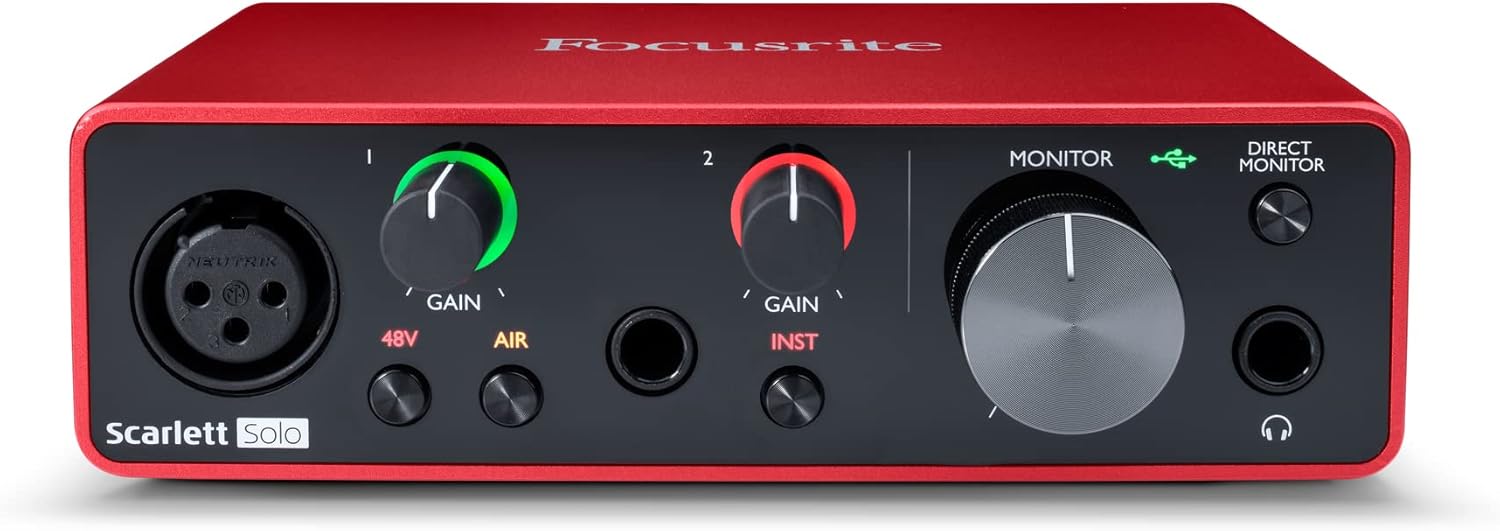
The single biggest mistake I see is people buying the Solo when they need two inputs. I did it myself, bought the Solo because I thought one input was enough, and a month later I was returning it for a 2i2. Just buy the 2-in/2-out from the start.
RME Babyface Pro FS
I don't usually cover interfaces over ~$500, but I borrowed this one from a friend who earns money with his studio, and I have to mention it. The drivers are flawless in a way that makes me angry at every other company. I plugged it in, it just worked. No driver roulette, no crackling, no latency hell. Sub-3ms round-trip on my old laptop, which is ridiculous.
If you're earning money with your studio, get one. Buy once, cry once. If you're not, spend the difference on a better mic. At ~$899, it's more than twice the price of the Audient, and the Audient gets you 90% of the way there.
MAONO MA-2
The budget king. Insane gain for the price. I ran a ribbon mic without a Cloudlifter, and it worked. That's unheard of at ~$49. You can drive an SM7B without a Cloudlifter, which is more than I can say for the Scarlett.
But the build feels cheap. The knobs are wobbly, the case is plastic, and it will probably die in a year. At ~$49, it costs less than a pizza. If it dies in a year, you got your money's worth. If you're tracking a client, don't. If you're testing the waters, it's fine.
Behringer UMC204HD
The cheap one that actually works. Class-compliant everywhere, no driver install, just works. The build is plastic, the knobs feel wobbly, but it won't fail you. I've had one in my drawer for two years as a backup, and I've never had to use it because it's never died.
What else to consider
The 3rd Gen Scarlett is still a fine choice if you can find it on sale. It's not as good as the 4th Gen, but it's ~$40 cheaper. The Universal Audio Volt is built like a brick shithouse and the vintage mode sounds genuinely good, but you're paying for the name and the software bundle. At ~$200 to ~$300, the Audient gives you cleaner preamps and a better DI.
Should you buy the Audient iD14?
If you're recording electric guitar or DI, yes. Save up the extra ~$40 over the Scarlett and get it. The preamps are cleaner, the DI is better, and the build will last. If you're recording vocals and acoustic, the Scarlett is fine. The difference is subtle, and you won't notice it until you've been recording for a year.
Should you buy the Focusrite 4th Gen?
If you're a beginner, the 3rd Gen is fine and cheaper. If you've already hit the 3rd's ceiling, the 4th Gen is a genuine step up. The gain staging is better, the build feels more solid, and the latency is tighter. For ~$159, it's the one I'd buy. For ~$120, the 3rd Gen is worth it if you can find it.
Ultimately, the interface is the quietest thing in your signal chain. The mic matters more, the room matters more, and the player matters most. Don't let anyone tell you that you need a ~$400 interface to record your acoustic guitar. A ~$120 Scarlett will get you there. But if you're recording electric guitar, save up for the Audient. You'll thank me when you hear the noise floor.