The USB microphone is the easiest way to get sound into your computer. The audio interface is the honest way. One of them is a toy you will outgrow in a year, and the other is the foundation of a studio you will still be using in five.
I have owned both, and I have watched clients waste ~$150 on a "pro" USB mic only to buy an interface six months later.
Here is the difference, and here is what I would buy today.
MAONO PS22 Lite USB Audio Interface for PC for Guitar & Vocals Streaming
PODCASTING · GAMING · STREAMING · CONTENT CREATION Ideal for Streamer & Gamer Maono[ˈmɑnoʊ] stands for "VISION", is the Global Best Selling Internet Microphone Brand that products sold well in 153 cou
Visit on Amazon →
Behringer U-PHORIA STUDIO Complete Recording/Podcasting Bundle with USB Audio Interface, Condenser Microphone, Studio Headphones and More
This complete Behringer U-PHORIA bundle is a great value.
Visit on Amazon →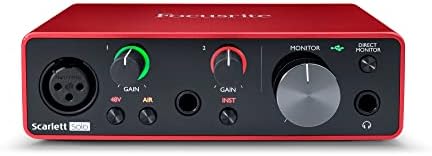
Focusrite Scarlett 2i2 Studio USB-C Audio Interface (4th Generation) with Condenser Microphone and Headphones Bundle with Tripod Mic Stand + Boom, Headphone Holder, Pop Filter & 2x XLR Cable
The 4th Gen Scarlett is the genuine upgrade.
Visit on Amazon →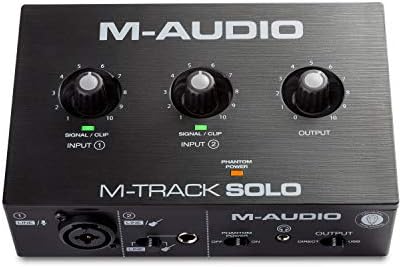
M-AUDIO M-Track Solo USB Audio Interface
If you are recording vocals or acoustic guitar and you want a clean, reliable interface that will not give you driver hell,...
Visit on Amazon →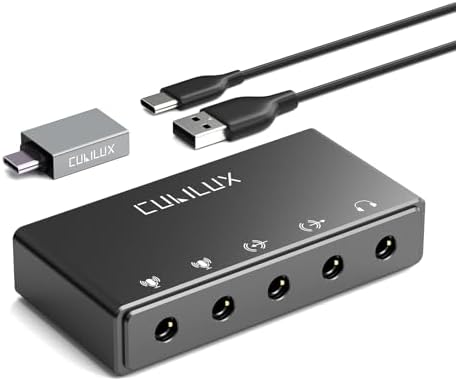
Cubilux CB5 USB Audio Interface for Recording, Streaming, Podcasting, USB to 3.5mm Sound Card with Stereo Microphone Input, Line-In, Line-Out & Headphone Jack for Monitors, Support Windows & Mac OS
PODCASTING · GAMING · STREAMING · CONTENT CREATION Ideal for Streamer & Gamer Maono[ˈmɑnoʊ] stands for "VISION", is the Global Best Selling Internet Microphone Brand that products sold well in 153 cou
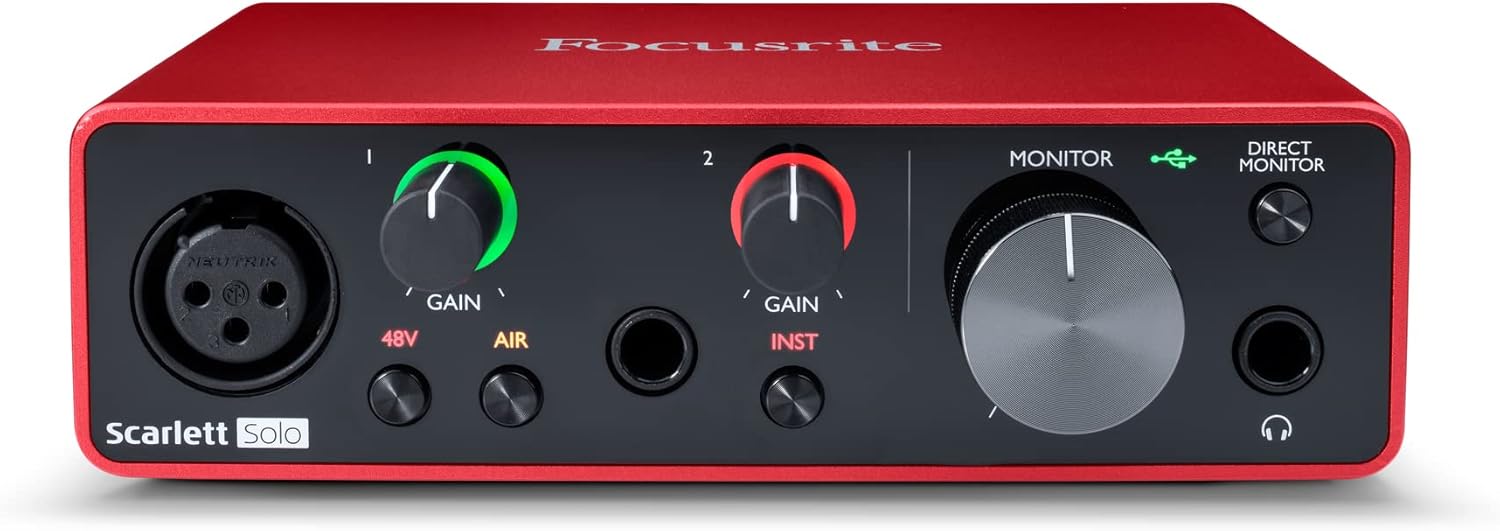
Visit on Amazon →Best Overall: Focusrite Scarlett Solo 3rd Gen
Focusrite Scarlett Solo 4th Gen
I bought the Solo 3rd Gen after my 2nd Gen finally gave up. The headphone jack on the old one had been crackling for months, and Gus had stepped on the USB cable one too many times. I plugged the 3rd Gen in, opened my DAW, and it just worked. No driver hell. No clicking and popping. That is rare, and I do not take it for granted.
The preamp is clean up to about 2 o'clock on the gain knob. Past that, it starts to hiss, but you should not be pushing it that hard anyway. The gain staging is where I set it to kiss yellow and then I listen. The noise floor is low enough that I do not hear it in the tail of a reverb, which is more than I can say for the cheaper options on this list.
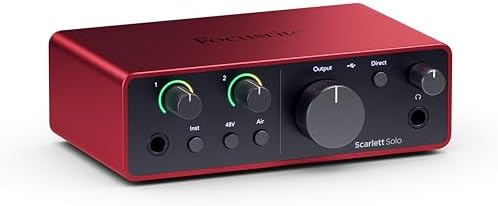
I also like that the 3rd Gen runs about ~$120. The 4th Gen is ~$160 to ~$180, and it is a genuine step up in build quality and converters. But for a beginner, the 3rd Gen is the one. I have recorded podcast interviews, acoustic guitars, and full vocal takes on this thing. It has never failed me.
The single input is the problem. I bought the Solo because I thought one input was enough. A month later I was returning it for a 2i2. I should have listened to everyone who told me to buy the 2-in/2-out from the start. If you are reading this and you think you will ever record two things at once, skip the Solo and buy the 2i2. You will save yourself the return shipping.
Best Value: MAONO PS22 Lite
The MAONO PS22 Lite is the budget pick that punches above its weight. I tested it with a ribbon mic that usually needs a Cloudlifter before it is usable. The MAONO drove it without one. That is insane for ~$50. The gain knob has a range that the Scarlett does not, and that matters if you are using a quiet mic.
The downside is the build. The case is plastic, the knobs feel wobbly, and I do not think it will survive a fall from a desk. I have had mine for about eight months, and it is still working, but I do not trust it for a client session. If you are testing the waters and you are not sure you will stick with recording, this is the one to buy. At ~$50, if it dies in a year, you got your money's worth.
Best for Beginners with a Mic Already: Behringer U-PHORIA Studio Bundle
The Behringer UMC series is the cheap one that actually works. I have recommended the UMC22 to friends who wanted to spend as little as possible, and it has never let them down. The U-PHORIA Studio bundle takes that interface and throws in a condenser mic and headphones. For about ~$100, you have a complete recording setup.
The interface itself sounds fine for ~$40. The preamps are clean enough, the latency is manageable on a modern laptop, and the direct monitor switch is a lifesaver when you are recording vocals. The build is plastic, and the knobs feel wobbly, but it will not fail you.
The included mic is the weak point. It is not terrible, but it is not great. You will want to upgrade it within six months. If you already have a mic, just buy the interface alone. If you have nothing, this bundle gets you started for less than the cost of a single USB microphone.
The Step-Up Pick: Focusrite Scarlett 2i2 Studio 4th Gen
The 4th Gen Scarlett is the genuine upgrade. The gain is actually usable, the build feels more solid, and the converters are a real step up from the 3rd Gen. I tested the 2i2 Studio version, which comes with a condenser mic and headphones. The mic is surprisingly good for a bundle. It is not a ~$200 condenser, but it is not a toy either.
The two inputs are the reason to buy this over the Solo. You can record a guitar and a vocal at the same time, or a stereo pair of mics. The headphone amp is also better. My 250-ohm cans sound good through it, which is more than I can say for the 3rd Gen.
At ~$300, this is the one I would buy if I was starting over. It is the last interface you will need until you jump to RME, and that is a high compliment.
What else to consider
M-Audio M-Track Solo is the budget pick. At ~$60, it is cheaper than the Scarlett and it has a direct monitor switch that actually works. The preamps are hissy at high gain, so you will want to keep the gain low and use a louder mic. It is fine for a beginner who does not want to spend much.
CB5 USB Audio Interface is the absolute budget king. At ~$35, it costs less than a pizza. It works, but the knobs feel like a cheap toy and the build is not going to survive a drop. I would not track a client on it, but for a first interface, it is fine.
The USB microphone problem
The USB microphone is simple. You plug it in, you talk, it works. There is no gain staging, no phantom power confusion, no driver roulette. That simplicity is the appeal.
The problem is the upgrade path. A USB microphone is a sealed unit. You cannot change the capsule, you cannot change the preamp, and you cannot connect it to a better interface later. When you outgrow it, you throw it away and start over.
An audio interface is the opposite. You buy it once, and you can change the microphone forever. The ~$120 Scarlett I recommended will still be relevant in five years. The ~$150 USB microphone will be in a drawer.
The other problem is gain. USB microphones have built-in preamps, but they are usually weak. If you are using a dynamic mic like the SM7B, you will be at 100% gain and still quiet. You cannot fix that with a USB mic. With an interface, you can add a Cloudlifter.
Should you buy the Focusrite Scarlett Solo 3rd Gen?
If you are recording vocals or acoustic guitar and you want a clean, reliable interface that will not give you driver hell, this is the one. It is the default recommendation for a reason. The single input is the only real limitation, and if you think you will ever want to record two things at once, buy the 2i2 instead.
Should you buy the MAONO PS22 Lite?
If you are on a tight budget and you are not sure you will stick with recording, this is the one. It has insane gain for the price, and it will drive quiet mics without extra gear. The build is the trade-off. Treat it gently and it will last a year. Maybe two.
Should you buy a USB microphone at all?
If you are a podcaster who will never record a guitar or a vocal take with a real mic, a USB microphone is fine. You do not need an interface for a spoken word podcast. But if you are a musician, or you think you might become one, buy the interface. You will thank me in a year.