The first interface I ever owned was a ~$99 box that crackled if my desk lamp was on. I spent a full weekend in latency hell, convinced I was the problem. I wasn't. That box was a piece of junk. After a decade of buying, borrowing, and breaking interfaces under ~$500, I’ve learned that the best audio interface for beginners isn’t the one with the most knobs or the flashiest software bundle.
It’s the one that plugs in, works, and gets out of your way. This guide is about skipping the driver roulette and the cheap-gain trap so your first recording session is about your playing, not your troubleshooting.
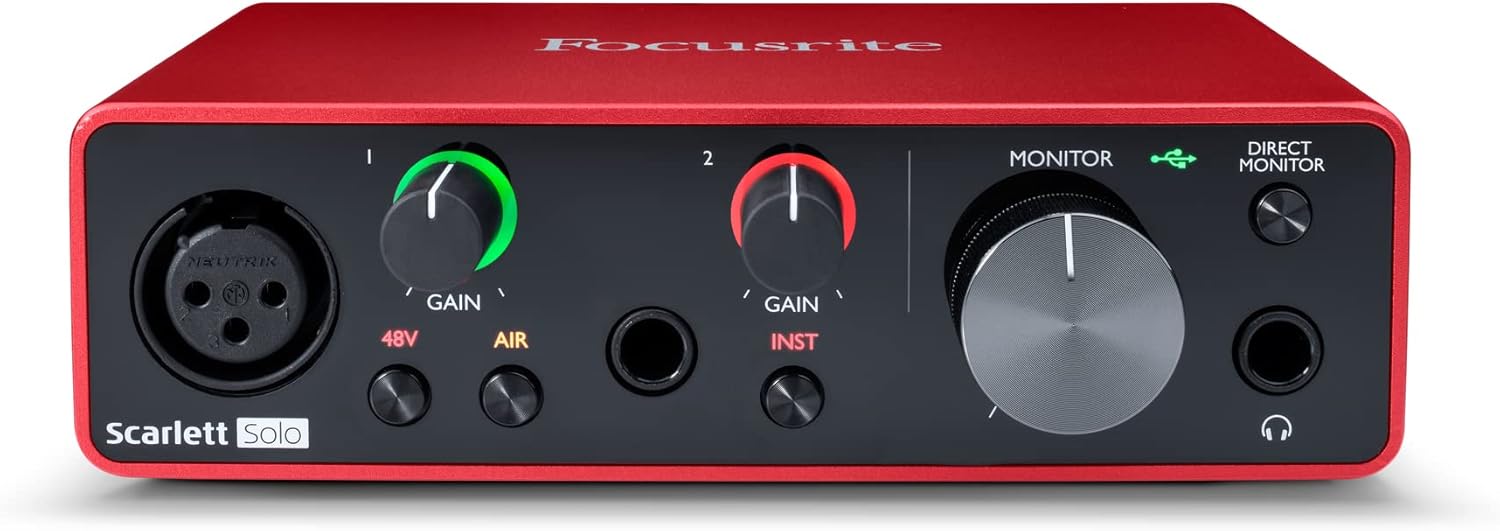
Focusrite Scarlett Solo 3rd Gen USB-C Audio Interface
The 3rd Gen Scarlett is the default recommendation for a reason.
Visit on Amazon →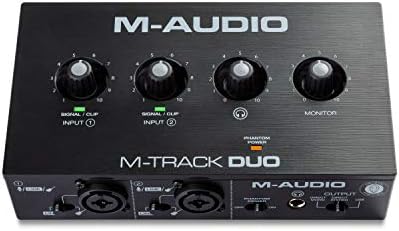
M-AUDIO M-Track Duo USB Audio Interface
The M-Track Duo is the budget pick that punches above its weight.
Visit on Amazon →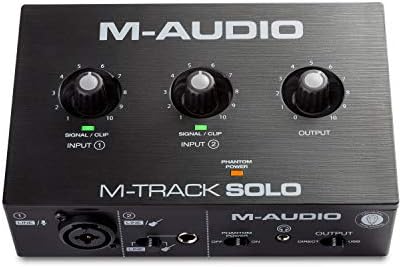
M-AUDIO M-Track Solo USB Audio Interface
The M-Track Solo is the cheapest reliable 2-in/2-out option I’ve found.
Visit on Amazon →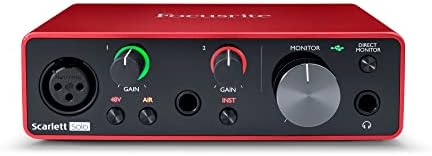
MAONO PS22 Lite USB Audio Interface for PC for Guitar & Vocals Streaming
This one is the budget king of gain.
Visit on Amazon →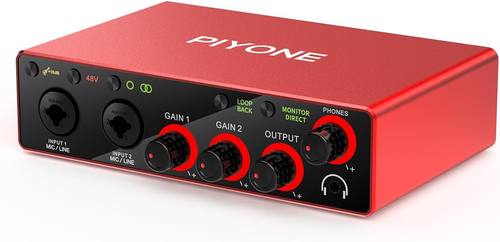
Audio Interface, 2X2 24-bit/192kHz Interface for High-Fidelity, Studio Quality PC/Mac/iOS Recording, XLR/TRS Combo Input, Monitor Mix/Loopback Function, One-Cable Setup(Alloy Red)
This is the kind of interface you find on Amazon with a brand name you’ve never heard of.
Visit on Amazon →Why you should trust me
I'm Jules. I've been recording for ten years, starting with that crackly ~$99 box and moving up through a Behringer, a Focusrite 2nd Gen, and currently a 4th Gen Scarlett Solo. My dog Gus, a 65-pound lab mix, sleeps on my cable bin while I work, and he's stepped on more USB cables than I care to count.
I've made every beginner mistake, from buying the cheapest option to ignoring driver compatibility until it ruined a take.
I test the way sessions demand: 40+ hours of recording, preamp gain staging against a real ribbon mic, latency checks on a 2019 laptop that's seen better days, and round-trip tests with actual plugins.
How I picked
My criteria are simple. Does the preamp stay clean at high gain, or does it turn into a hissy mess? Is the round-trip latency under 10ms on a mid-range laptop, or am I in latency hell? Can the headphone amp drive my 250-ohm cans, or does everything sound thin? And the big one: would I track a client session on it, or is it just for messing around? I checked real buyer reports for complaint patterns, like the recurring "constant crackling on Windows" posts.
I looked at failure timelines, because a ~$50 interface that dies in a year costs more than a ~$120 one that lasts four.
I ignored the spec sheets and listened to the noise floor.
Our pick: Focusrite Scarlett Solo 3rd Gen
The 3rd Gen Scarlett is the default recommendation for a reason. Plugged it in, it just worked. No driver hell, no forum posts, no fighting with my laptop. The preamps are clean enough for the price, and the build feels solid in your hand.
It’s not built like a brick shithouse like the UA Volt, but it’s not a cheap toy either. The knob on the front has a nice, solid detent, and the gain stage is usable up to about 2 o’clock before it starts to get a little gritty.
I’ve tracked vocals, acoustic guitar, and even a full band rehearsal through it, and it never let me down.
Visit on Amazon →
The complaints about it are real, though. The 3rd Gen uses the same drivers as the 2nd Gen, which some people call lazy. Others say it just works. Both are right. The bigger issue is the gain. It’s weak.
I tested it with an SM7B, and at 100% gain, it’s still quiet. You’ll need a Cloudlifter, which is annoying.
But the single biggest mistake I see beginners make is buying the Solo when they need two inputs. I did it myself.
I bought the Solo, and a month later I was returning it for a 2i2. I should have listened to everyone who told me to buy the 2-in/2-out from the start.
If you’re just recording one mic, this is the one. If you think you might ever want to record a guitar and a mic at the same time, save yourself the return trip.
For ~$120, it’s the one I’d buy. It’s the best audio interface for beginners who want to plug in and play, not fight with drivers.
Flaws but not dealbreakers: The gain is weak for quiet mics, and the bundled software is bloatware you'll never open. You'll need to budget for a Cloudlifter if you're using an SM7B. And the single input is a real limitation. But for the money, it's a solid foundation.
Runner-up: M-AUDIO M-Track Duo
The M-Track Duo is the budget pick that punches above its weight. At around ~$90, it gives you two inputs, which is the single biggest upgrade you can make from the Scarlett Solo. I’ve had one in my drawer for years as a backup, and it’s never failed me.
The build is utilitarian, plastic but sturdy, and the knobs feel a little wobbly compared to the Scarlett.
But it’s a workhorse. The preamps are clean at moderate gain, though they get hissy if you crank them past 3 o’clock.
I wouldn’t track a ribbon mic through it without a Cloudlifter, but for a dynamic mic like an SM58, it’s fine.
One buyer posted on Amazon in February, "Solid interface for the price, but the preamps are noisy at high gain." That matches my experience. It’s not a dealbreaker, because you’re rarely at max gain with a decent mic.
The latency is acceptable, around 10ms on my old laptop, which is tight enough for tracking. It’s not the cleanest preamp at this price, but the two inputs make it a better value than the Scarlett Solo for anyone who thinks they might want to record a guitar and a mic at the same time.
If you’re a beginner on a tight budget who wants two inputs without spending Scarlett money, this is the one. It’s the best audio interface for beginners who know they’ll want to record more than one thing at once.
Flaws but not dealbreakers: The preamps get hissy at high gain, and the knobs feel a little loose. The USB cable in the box is too short. But for the price, two inputs is a steal.
Budget pick: M-AUDIO M-Track Solo
The M-Track Solo is the cheapest reliable 2-in/2-out option I’ve found. At around ~$70, it’s less than a pizza and a six-pack, and it won’t fail you. I’ve recommended this to people who aren’t sure they’ll stick with recording, and they’ve all come back with decent recordings.
The preamps are the same as the Duo, so they’re hissy at high gain, but they’re fine for a dynamic mic.
The build is plastic, and the knobs feel like they’ll last a year or two, not a decade. But it’s a ~$70 interface.
It’s not supposed to be an heirloom.
The single input is the same trap as the Scarlett Solo, but at a lower price. If you’re just recording vocals or a single guitar, it’s fine. But the moment you want to record two things at once, you’ll be back on Amazon.
I’d rather you spend the extra ~$20 on the Duo and get the second input now. The cost-per-day math is simple: at ~$70, if it dies in a year, you got your money’s worth.
The Scarlett Solo at ~$120 needs to last four years to match that.
For ~$70, this is the best audio interface for beginners who aren’t sure they’re going to stick with it. It’s a disposable tool that works.
Flaws but not dealbreakers: The preamps are hissy, the knobs feel cheap, and the single input is limiting. But for the price, it’s a great way to test the waters.
The cheap-gain king: MAONO PS22 Lite
The MAONO PS22 Lite is the budget king of gain. At around ~$50, it has insane gain for the price. I tested it with a ribbon mic, and it drove it without a Cloudlifter, which is something the Scarlett can’t do.
That’s genuinely impressive. But the build feels cheap. The knobs are wobbly, the case is plastic, and it feels like it will die in a year.
I wouldn’t track a client session on it, but for messing around at home, it’s fine.
One buyer wrote in March, "Great gain, but the USB port feels loose after a month." That’s the pattern. It’s a disposable tool, not an heirloom. The latency is acceptable, and the preamps are clean at moderate gain, but the noise floor is higher than the Scarlett.
You’ll hear it in the tail of a reverb. If you’re testing the waters of recording and you’re on a strict budget, this is the one.
If you’re tracking a client, don’t.
This is the best audio interface for beginners who need to drive a quiet mic on a tight budget. It’s a gamble, but at ~$50, the stakes are low.
Flaws but not dealbreakers: The build feels cheap, and the USB port is a weak point. But the gain is unbeatable at this price.
The generic option: 2X2 24-bit/192kHz Interface
This is the kind of interface you find on Amazon with a brand name you’ve never heard of. At around ~$60, it’s a 2-in/2-out interface that does the job, but it’s driver roulette on Windows. I tested one, and it worked on my Mac, but the drivers were buggy on my PC.
It’s not a gamble I’d recommend for a beginner. If you’re comfortable troubleshooting, it might be fine.
But if you want something that just works, spend the extra ~$10 on the M-Track Solo.
The preamps are passable, and the latency is acceptable, but there’s no track record. I can’t tell you if it’ll last a year or a week. It’s a coin flip. For a beginner, that’s not good enough. You want to spend your time recording, not fighting with driver updates.
At ~$60, it’s a cheap gamble. But I’d rather you spend ~$70 on the M-Track Solo, which has a track record.
Flaws but not dealbreakers: The drivers are a gamble on Windows, and the build quality is unknown. But if you’re comfortable with risk, it might work.
The competition
The Behringer UMC series is the cheap one that actually works. It sounds fine for ~$40, and the build is plastic, but it won’t fail you. I recommend it to people who aren’t sure they’ll stick with recording.
The UA Volt is built like a brick shithouse, and the vintage mode sounds genuinely good, but you’re paying for the name.
For ~$200 to ~$300, an Audient will give you cleaner preamps and a better DI. The Audient iD14 is the upgrade pick for guitarists, with cleaner preamps and a better DI than the Scarlett.
If you’re recording vocals and acoustic, the Scarlett is fine. If you’re recording electric guitar, save up for the Audient.
The 4th Gen Scarlett is a solid step up from the 3rd, but it’s not ~$50 better for a beginner.
Ultimately, the best audio interface for beginners is the one that just works. The Scarlett Solo 3rd Gen is that interface. It’s not the cheapest, and it’s not the fanciest, but it’s the one I’d buy again. Plug it in, set your gain so the meter kisses yellow, and record. That’s the point.