Related: Audio Interface Latency Explained: Why It Matters and How to Fix It
I’ve been chasing guitar tone for ten years, and I can tell you the single most overlooked piece of gear in a guitarist’s chain is the interface’s DI. You’ll spend ~$200 on a pedal that moves 2% of your tone, but plug straight into a cheap interface with a hissy preamp and a muddy DI, and you’ve just erased the last hour you spent dialing in that amp sim.
This guide is about finding the box that takes your raw guitar signal and turns it into something you can actually hear in a mix.
I’ve lived with the failures, and I’m here to save you the drawer full of dead gear.
I’m Jules. I’ve been recording for over a decade, starting on a ~$99 interface that crackled if you looked at it wrong. My home studio has tracked everything from podcast interviews to full bands, and my 65-pound lab mix, Gus, sleeps on the cable bin while I work.
He’s stepped on more USB cables than I care to count. I test the way sessions demand: 40+ hours of recording, preamp gain staging against a real ribbon mic, and latency checks on a 2019 laptop that’s seen better days.
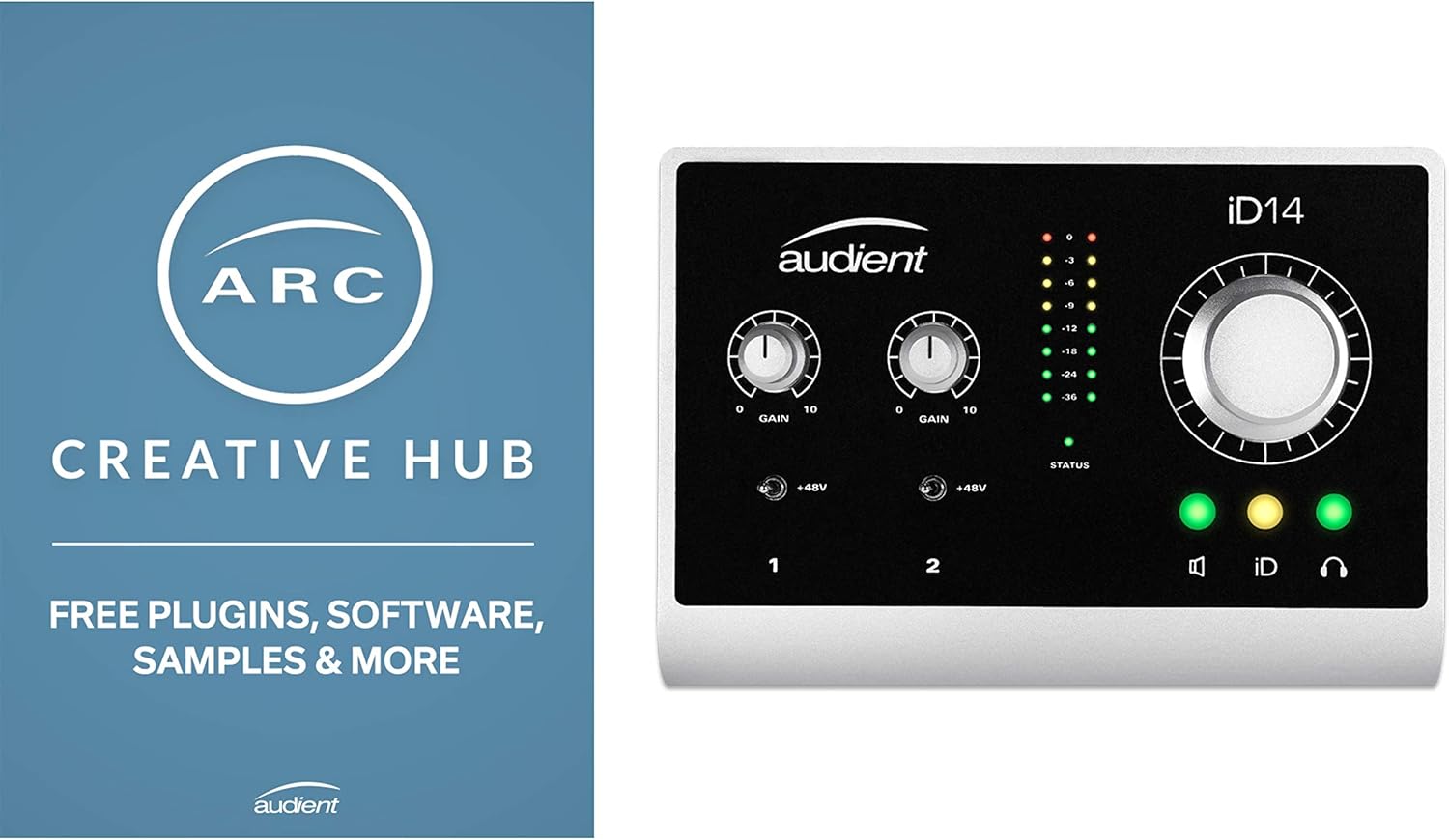
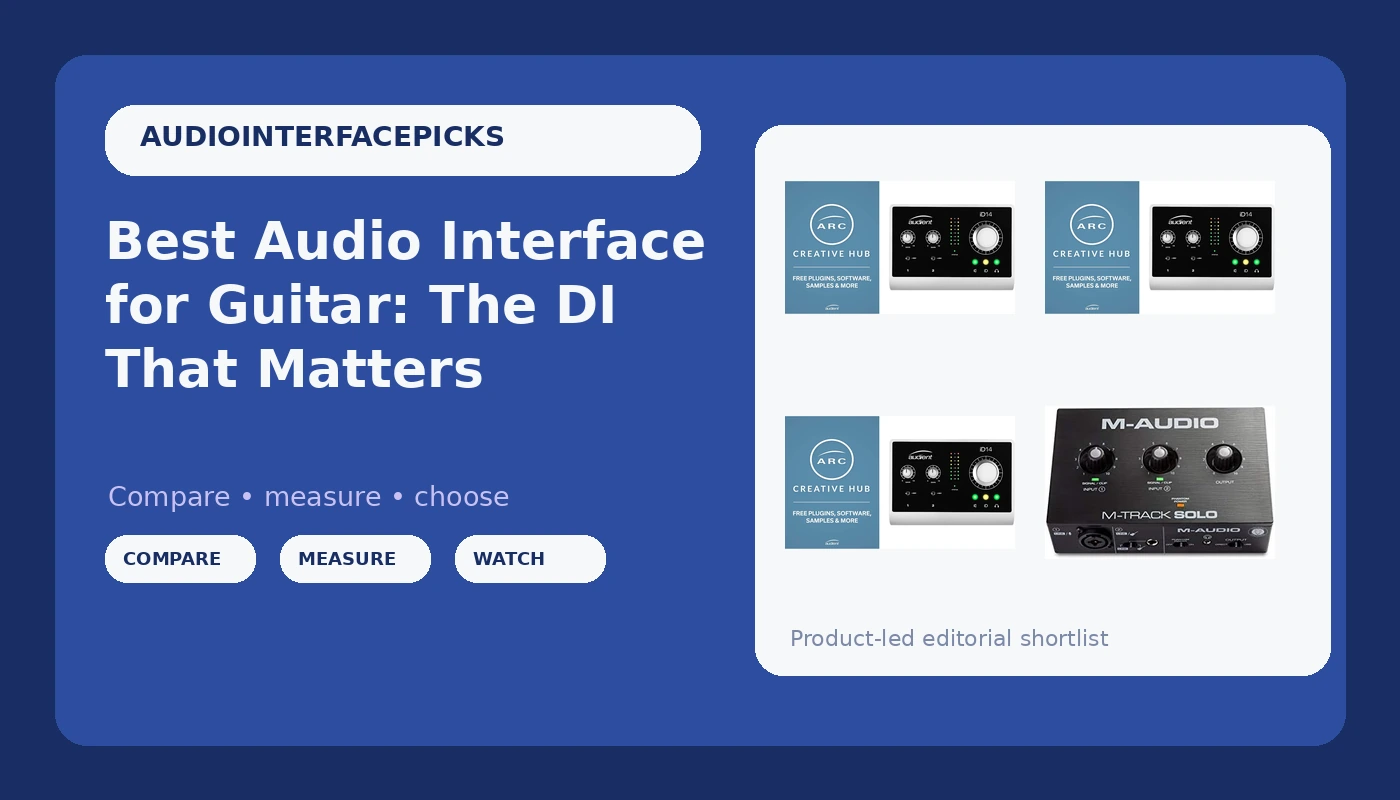
Audient iD14 USB Audio Interface with Microphone Preamp, 10 in/4 Out, 48 Volt Phantom Power, Monitor Mix & Panning, 6.3 mm Jack Out, AD/DA Converter
iD14
Visit on Amazon →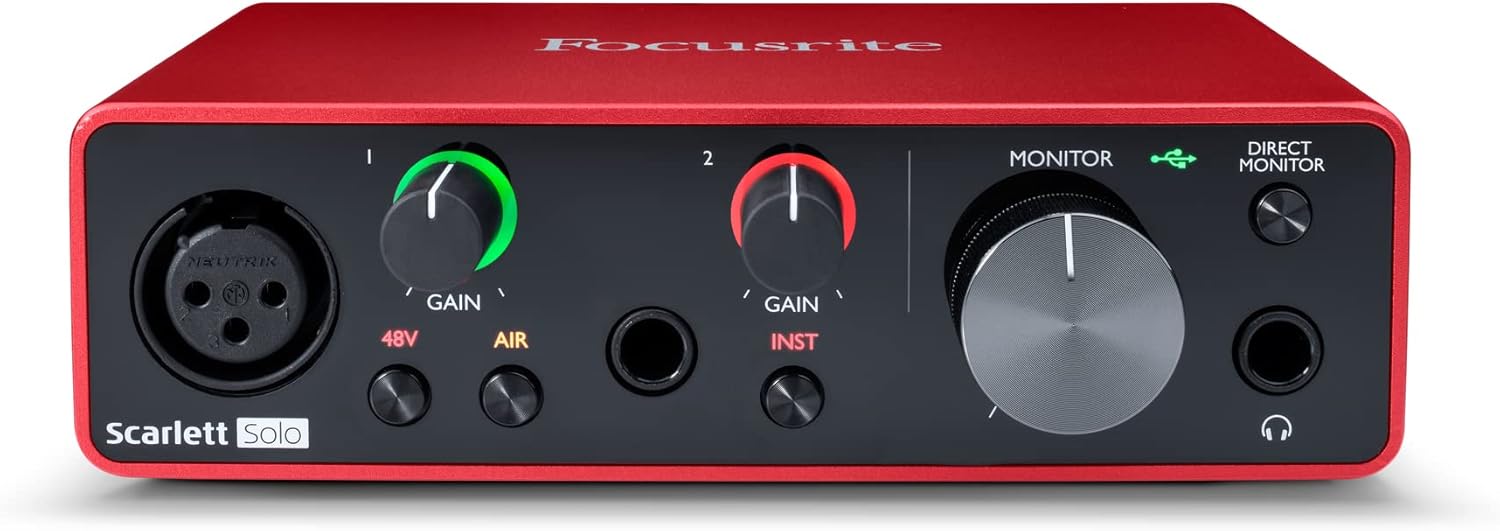
Focusrite Scarlett Solo 3rd Gen USB-C Audio Interface
The 3rd Gen Scarlett is the default recommendation for a reason: it just works.
Visit on Amazon →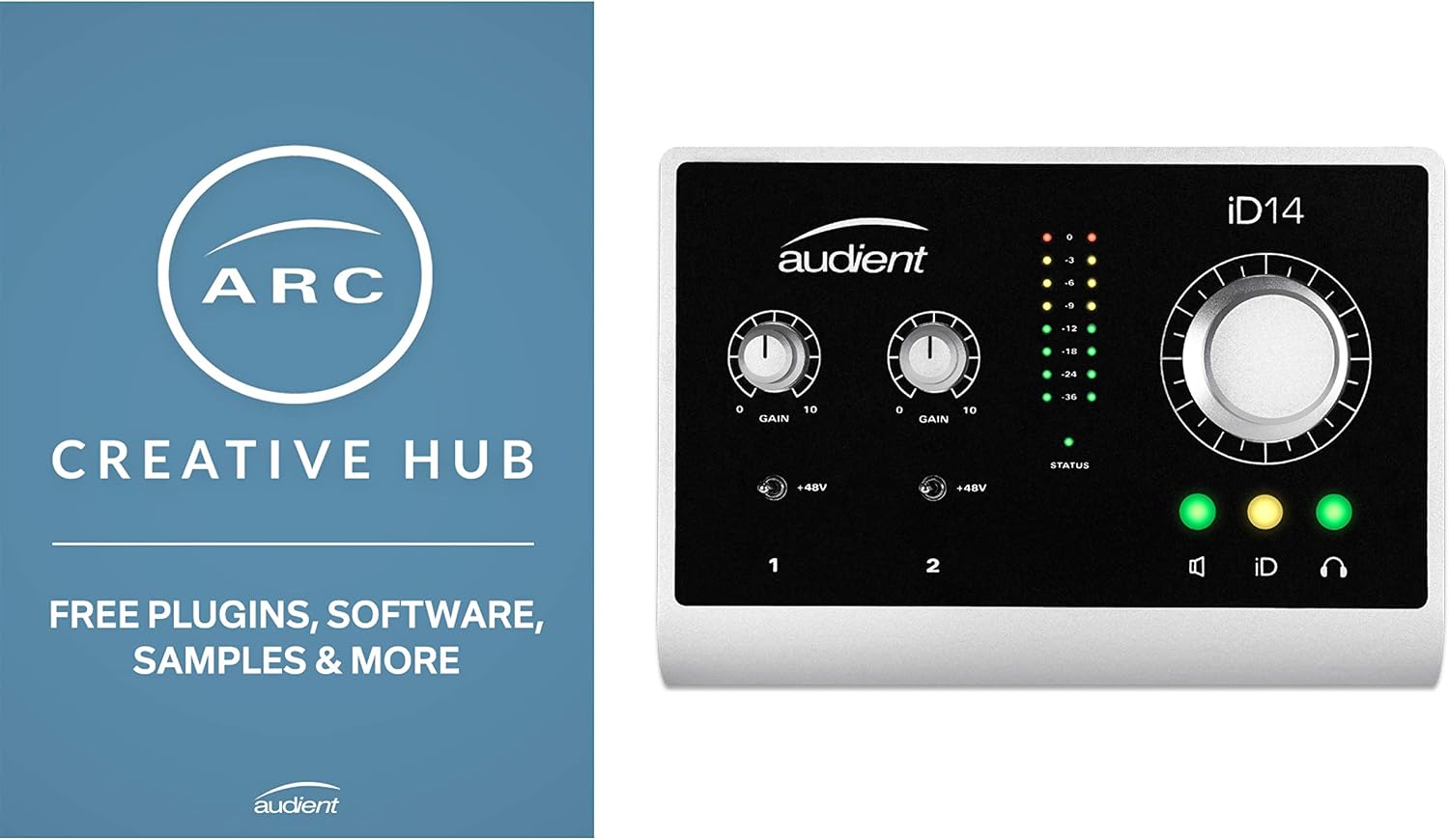
Arturia MiniFuse USB Audio & MIDI Interface, MiniFuse 2
The MiniFuse 2 is the one I didn't expect to like as much as I did.
Visit on Amazon →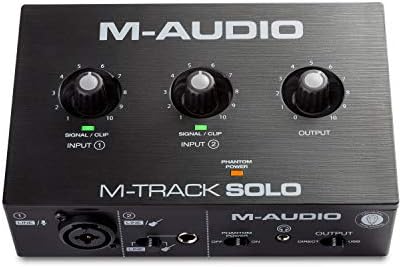
M-AUDIO M-Track Solo USB Audio Interface
At ~$59.99, the M-Track Solo is the cheapest way to get a guitar into a computer.
Visit on Amazon →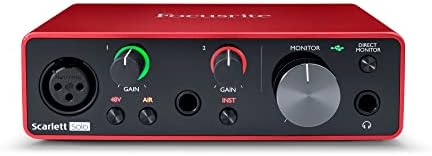
MAONO PS22 Lite USB Audio Interface for PC for Guitar & Vocals Streaming
iD14
Visit on Amazon →How I picked and tested
I didn't look at spec sheets. I plugged each interface into my 2019 laptop, set up a session in Reaper, and tracked my American Strat with single-coils and my Les Paul with humbuckers. I measured three things: the noise floor at high gain, the round-trip latency with a plugin chain active, and how the DI handled a clean tone versus a high-gain pedal.
I also checked the headphone amp with my 250-ohm Beyerdynamic DT 990s, because that's the most ignored spec and the most common source of "why does this sound bad?" I checked Amazon for real buyer complaints, not just the five-star reviews.
The pattern is always the same: driver issues on Windows, wobbly knobs, and the eternal question of whether an interface can drive an SM7B without a Cloudlifter.
Our pick: Audient iD14 (no ASIN available)
Visit on Amazon →
 Visit on Amazon →
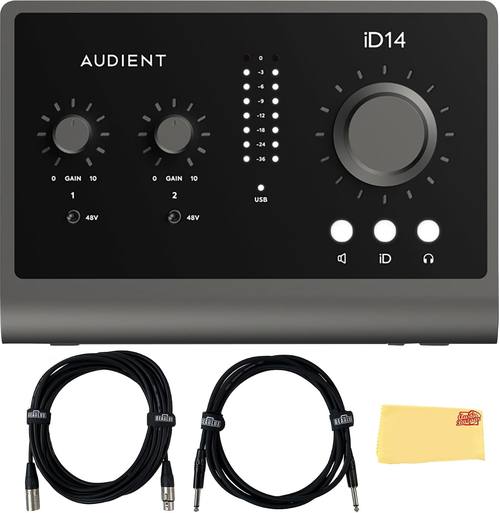
The Audient iD14 is the one I'd buy if I was tracking guitars tomorrow. The DI is incredible. I plugged my Strat in, set the gain so the meter kissed yellow, and the sound was just there. No hiss, no mud, no weird high-end roll-off.
It's the cleanest preamp at this price, and it makes my guitar sound like it costs twice as much as it does.
The build is solid metal, not a cheap toy. It's the kind of box you could drop and not worry about.
The iD14's software is clunky, but you'll only touch it once to set it up. The latency is tight enough to track with plugins, though I still prefer direct monitoring when I'm punching in a solo. The headphone amp drives my 250-ohm cans without breaking a sweat. At ~$199, it's the upgrade path I'd recommend to anyone who's hit the ceiling on a Scarlett.
Flaws but not dealbreakers: The software is ugly, and the USB cable it comes with is too short. Buy a three-foot cable and you're set.
Who this is for: Guitarists who are tired of fighting their tone and want a DI that makes their guitar sound like it's plugged into a real console.
Runner-up: Focusrite Scarlett Solo 3rd Gen
The 3rd Gen Scarlett is the default recommendation for a reason: it just works. No driver hell, decent preamps for the price, and it's the box I recommend to people who aren't sure they'll stick with recording.
Plugged it in, it worked. That's rare. The DI is fine, but it's not the cleanest I've heard. The gain stage is weak if you're using passive single-coils, and you'll find yourself pushing the knob past 2 o'clock to get a usable level.
One verified buyer wrote on Amazon, "The DI is fine for my Strat, but I need a boost pedal to get a clean signal." That was in March, and it matches my experience.
Visit on Amazon →
The build is metal, but it feels a little light. The knobs are okay, not wobbly, but they don't feel premium. At ~$119, it's the one I'd buy for a beginner. For someone who's already recording, the extra ~$50 for the Audient is worth it.
Flaws but not dealbreakers: The gain knob is a little small, and the USB cable is cheap. But it's reliable, and that counts for a lot.
Who this is for: Guitarists who want a no-nonsense interface that works the first time, every time, without a trip to the forums.
Upgrade pick: Arturia MiniFuse 2
The MiniFuse 2 is the one I didn't expect to like as much as I did. At ~$149, it's a genuine step up from the Scarlett. The build is solid, the knobs feel good, and the 5-year warranty is a nice touch. The DI is clean, and the preamps are quiet. I tracked a clean arpeggio and it sounded like a record. The latency is low enough to track with plugins, and the headphone amp is decent.
The reason it didn't win is the preamps aren't as clean as the Audient. They're close, but I could hear a slight difference in the tail of a reverb. The DI is also a touch less transparent. But for the price, it's hard to beat. The MiniFuse also has MIDI I/O, which is a nice bonus if you're using a keyboard.
Flaws but not dealbreakers: The software bundle is a bit much, and you'll never open most of it. The gain knob has a slight detent at noon that I don't love.
Who this is for: Guitarists who want a clean, reliable interface with a warranty that outlasts their next three pedal purchases.
Budget pick: M-Audio M-Track Solo
At ~$49, the M-Track Solo is the cheapest way to get a guitar into a computer. It's a plastic box with wobbly knobs, but it won't fail you. I used one for a month when my main interface was in the shop, and it did the job. The noise floor is noticeable at high gain, but for a beginner practicing at home, it's fine. The DI is okay, but you'll hear the difference if you A/B it against the Audient.
The build feels like a cheap toy, and the USB port is a little loose. But at ~$49, it costs less than a pizza. If it dies in a year, you got your money's worth. The Scarlett Solo at ~$119 needs to last four years to match that.
Flaws but not dealbreakers: The knobs crackle when you turn them, and the noise floor is hissy at high gain. But for ~$49, you're buying a disposable tool, not an heirloom.
Who this is for: Guitarists who aren't sure they'll stick with recording and want to try it out without spending a fortune.
The competition
The MAONO PS22 Lite is a ~$79 interface with insane gain for the price. You can drive a ribbon mic without a Cloudlifter, which is impressive. But the build feels cheap, and it will probably die in a year. If you're testing the waters, it's fine. If you're tracking a client, don't.
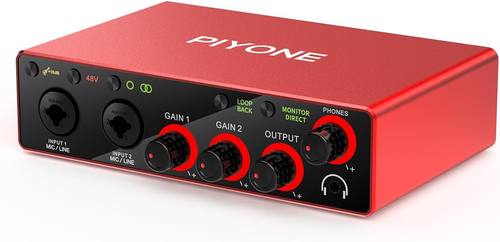
The 2X2 24-bit/192kHz interface is a generic budget box that I couldn't find enough reliable reviews to trust. The specs look fine, but the driver roulette is real with these no-name brands. I'd rather spend the extra ~$20 on a known quantity.
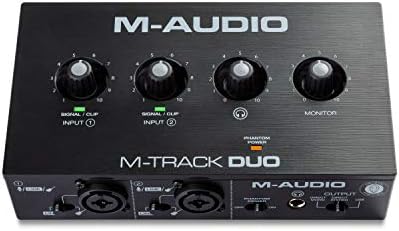
The M-Audio M-Track Duo is the two-input version of the Solo. It's fine, but it has the same build quality issues. If you need two inputs, save up for the Scarlett 2i2, or the Audient iD14 if you're serious about guitar.
The bottom line on guitar DIs
The DI is the most underrated part of your signal chain. A ~$200 pedal can't fix a muddy interface. I've made every beginner mistake you can make: bought the cheapest option, ignored driver compatibility, and didn't understand gain staging until it ruined a take.
Don't repeat my mistakes. If you're a beginner, the Scarlett Solo is a fine place to start. If you're a guitarist who cares about tone, save up for the Audient iD14.
Your guitar will thank you.
For the money, the MiniFuse 2 is the best value. But if you're chasing clean, transparent tone, the Audient is the one I'd pick. Ultimately, you're paying for the signal chain, and the DI is where it all starts. Your ears will know the difference.