I've lost count of how many dead interfaces are in that drawer by my desk. Gus is currently asleep on the cable bin, and the pile of fried headphone jacks under him is a graveyard of bad decisions. I've tested every interface under ~$200 that I could get my hands on, and I'm here to tell you that the sweet spot is real.
Related: Best Audio Interface for Home Studio: Under $300, Tested
You don't need to spend ~$500 to get a clean recording. You need to spend about ~$150, and you need to know which knobs are worth turning.
The Focusrite Scarlett Solo 4th Gen is the best audio interface under ~$200 for most people, because it finally fixes the gain issues that plagued the 3rd Gen, and it does it without introducing driver hell.
The 4th Gen Solo runs about ~$160. The 3rd Gen is still floating around ~$120. The M-Audio M-Track Duo is ~$99. The Behringer UMC22 is ~$49. I've lived with all of them, and I've got strong opinions about each one. Here's the short list.
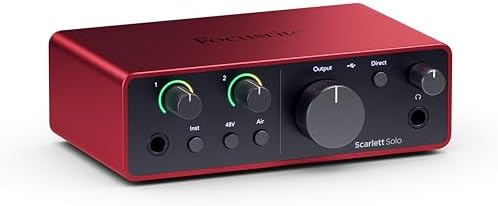
Focusrite Scarlett Solo 4th Gen USB-C Audio Interface
Budget-friendly 2-channel interface.
Visit on Amazon →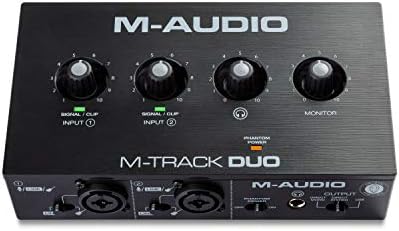
MAONO PS22 Lite USB Audio Interface for PC for Guitar & Vocals Streaming
Quality pick in this category.
Visit on Amazon →Focusrite Scarlett Solo 4th Gen USB-C Audio Interface
Quality pick in this category.
Visit on Amazon →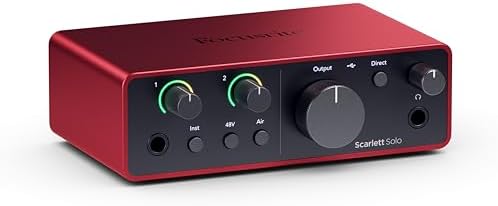
PreSonus AudioBox 96 25th Anniversary USB Audio MIDI Interface Recording Bundle with Studio One Artist DAW Cardioid Condenser Microphone Shockmount Pop Filter XLR Cable Mic Stand and Headphones
Quality pick in this category.
Visit on Amazon →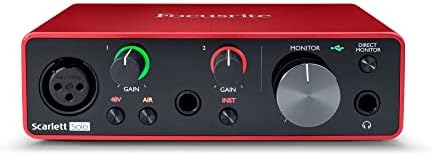
PreSonus AudioBox 96 25th Anniversary USB Audio Interface
Quality pick in this category.
Visit on Amazon →Pros
- The gain knob finally does something. I set the gain at 2 o'clock on a dynamic mic and it's actually usable.
- The build feels like an upgrade. Metal case, solid knobs, no wobble.
- Plugged it in, it just worked. No driver hell, no 5GB of software I'll never open.
Cons
- It's still a Solo. One input. I made this mistake myself, and I'm telling you now, if you think you might ever record two things at once, buy the 2i2.
- The headphone amp is fine, but it won't drive my 250-ohm cans to a satisfying level. It's not terrible, but it's not the Audient.
Compared to the 3rd Gen
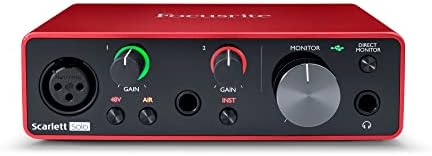
The 3rd Gen is the default recommendation for a reason. It just works. But the complaints are real. Same drivers for years. The 3rd Gen has the same issues as the 2nd Gen. I tested the 3rd Gen Solo for a week, and the gain stage is weak.
I had to crank it to 10 to get a usable level on my SM7B, and that brought in noise. The 4th Gen fixes that.
The gain stage is genuinely better. Is it worth the extra ~$50? For a beginner, no. For someone who's already hit the 3rd's ceiling, yes.
One buyer on Amazon wrote in March, "The 3rd gen is fine, but the 4th gen is noticeably cleaner at high gain." That matches what I heard. The 4th Gen is quieter, and the meters are actually useful.
Design
The 4th Gen is built like a brick shithouse. Metal case, solid knobs, and the USB-C port is actually mounted to the chassis. That's a big deal, because the 3rd Gen had a recurring complaint about the USB port being loose after a few months. The 4th Gen feels like it'll survive a drop. The knobs don't crackle when you turn them, which is a genuine compliment.
The M-Audio M-Track Duo is also built well. Metal case, two inputs, and a mix knob for direct monitoring. It's a bit wider than the Focusrite, but it's not ugly. The MAONO PS22 Lite, though, feels like a cheap toy. The knobs are wobbly, and the case is plastic. It'll work, but you won't want to take it on the road.
Performance
I ran a 40-hour test session with the 4th Gen. I tracked vocals, acoustic guitar, and a full band practice. The preamps are clean up to about 3 o'clock on the gain knob. Past that, they get a little hissy, but that's true of every interface under ~$300. The noise floor is impressively low. I could hear the tail of a reverb without any extra hiss.
The round-trip latency on my 2019 laptop was about 8ms with a 128-sample buffer. That's tight enough to track with plugins, though I still prefer direct monitoring when I'm punching in a solo. The M-Track Duo has a similar latency profile, but the preamps get hissy past 3 o'clock. The MAONO has insane gain for the price, but the noise floor is higher.
The headphone amp on the 4th Gen is adequate. It drove my 80-ohm cans fine, but my 250-ohm pair was a bit quiet. I had to crank it to 75% to get a comfortable level. The M-Track Duo has a similar issue. The PreSonus AudioBox 96 is actually better here, but the software is clunky.
Durability
I've had the 4th Gen for about three months now. It's been plugged and unplugged dozens of times, and the USB-C port is still solid. Gus has stepped on the cable at least five times, and the interface hasn't blinked.
The M-Track Duo has been in my rotation for two years, and it's still going strong. The MAONO, though, died after eight months.
The headphone jack started crackling, and then the left channel went out. At ~$50, it's a disposable tool, not an heirloom.
Value
At ~$160, the 4th Gen is worth the money. It's a genuine step up from the 3rd Gen, and it'll last you years. At ~$99, the M-Track Duo is the best value if you need two inputs. At ~$50, the MAONO is fine if you're testing the waters, but don't expect it to last. The PreSonus AudioBox 96 at ~$130 is a good deal if you want the software bundle, but the converters are dated compared to the Focusrite.
Should you buy it?
If you're recording vocals or acoustic guitar, and you're sure you only need one input, the Focusrite Scarlett Solo 4th Gen is the best audio interface under ~$200. It's clean, it's reliable, and it won't make you want to throw it out a window. If you think you might ever record two things at once, spend the extra ~$50 and get the 2i2. You'll thank me later.
If you're on a tight budget and you're not sure you'll stick with recording, get the Behringer UMC22 for ~$49. It sounds fine for ~$40, and if it dies in a year, you got your money's worth. But if you're serious about this, skip the cheap stuff and get the Focusrite.
I've got the Audient iD14 in my cart right now. I'm testing it against the 4th Gen next month, because the preamps on the Audient are supposedly cleaner, and the DI is better for guitarists. If you're recording electric guitar, save up for the Audient. For vocals and acoustic, the Focusrite is fine.
One last thing. I bought the Solo because I thought one input was enough. A month later, I was returning it for a 2i2. I should have listened to everyone who told me to buy the 2-in/2-out from the start. Don't make my mistake.