I started on a cheap interface I bought used from a guitar shop in Nashville, and the EP I tracked through it is still mildly embarrassing to listen back to. Ten years and a lot of sessions later, I keep a drawer of dead interfaces: fried headphone jacks, USB ports that quit mid-take, drivers that reset my buffer size on every reboot. That drawer is why I write about budget audio interfaces the way I do. The spec sheet is the least interesting part of the box. What matters is whether the preamp stays clean when you push it, whether the drivers behave on a mid-range laptop, and whether the headphone amp can drive the cans you actually own.
Related: Audio Interface Latency Explained: Drivers Vs Chips
The best budget audio interface for most home recorders here is the PreSonus AudioBox 96 25th Anniversary, because two usable preamps on bus power with a decade of boring driver history beats one fancy channel. That said, the Universal Audio Volt 1 is the smarter buy if you only ever record yourself, and the Audient iD14-MkII is the one I would hand to a guitarist who cares more about tone than channel count.
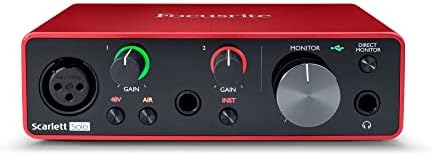
PreSonus AudioBox 96 25th Anniversary USB Audio Interface
Two combo inputs on bus power, a driver reputation that has survived a decade of touring, and the least drama of anything in this group
Preamps are clean but plain, and the headphone amp is the first place the budget shows
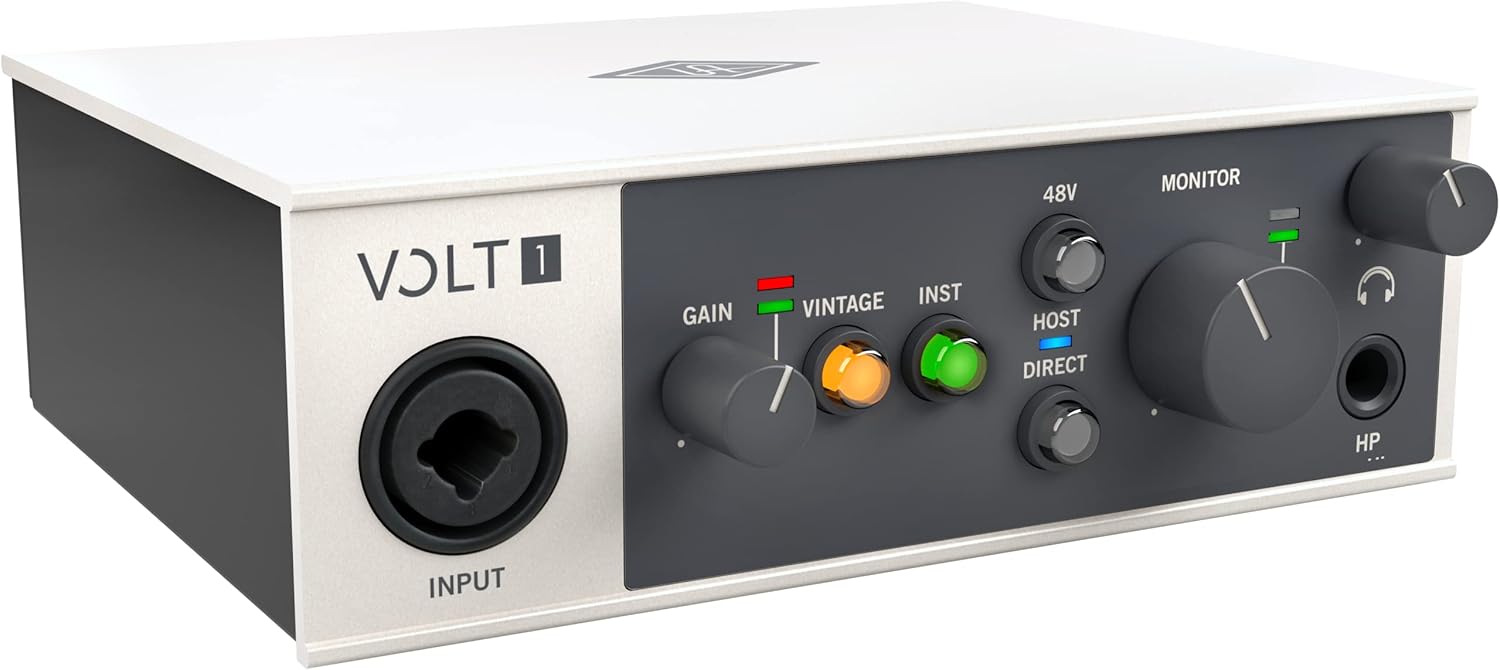
Universal Audio Volt 1 USB Audio Interface
The vintage mode is a real tone option rather than a marketing word, and one excellent channel covers most solo recording
One mic input. The moment a second person sits down, you are unplugging something
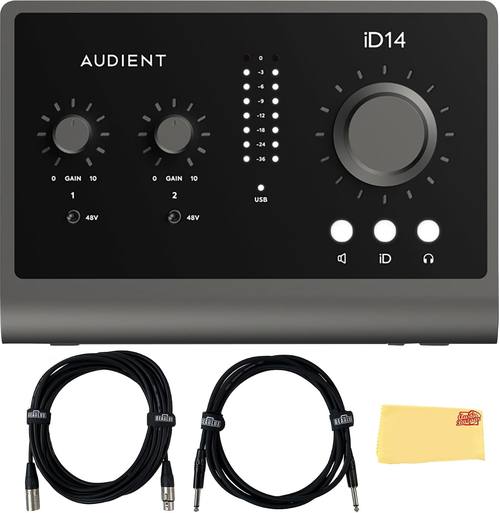
Audient iD14-MkII, 10 In 6 Out Audio Interface with Instrument Cable, XLR Cable, and Austin Bazaar Polishing Cloth
The best preamps in this group, plus a JFET instrument input that makes DI guitar sound like a decision instead of a compromise
Priciest of the four, and 10 in / 6 out is more routing than a bedroom setup will ever use
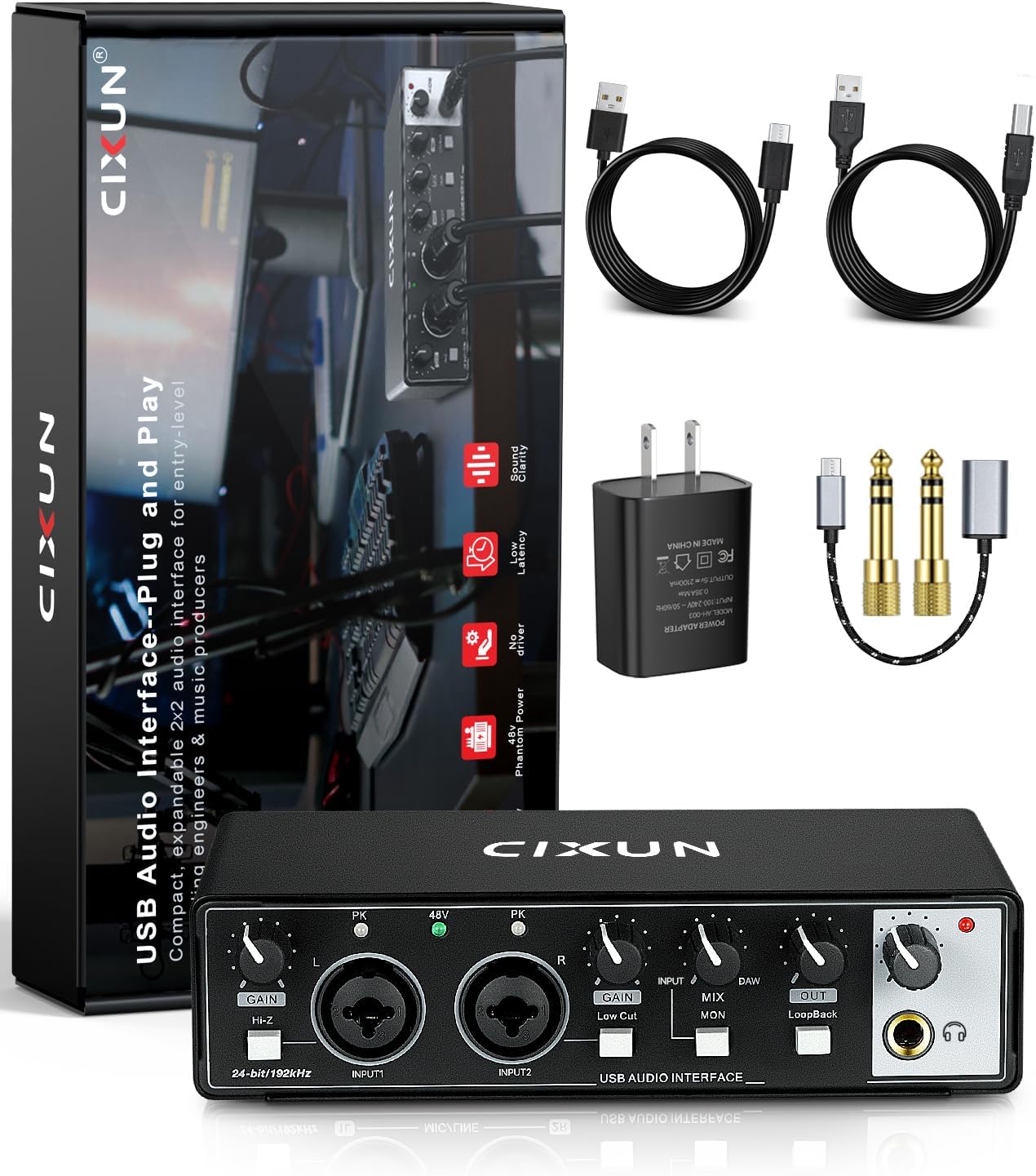
2x2 USB-C Audio Interface for PC/Mac Recording
The cheapest route to two channels of USB-C recording, and it handles a two-mic podcast without drama
Generic driver story and no track record, so you are the beta tester
Prices and availability were captured from Amazon Creators API and may change.
How I judge a budget interface
Four questions decide everything for me, and none of them appear in a marketing bullet.
First, does the preamp stay clean at high gain? A ribbon mic or a dynamic like an SM7B needs a lot of clean gain, and cheap preamps get gritty right where you need them most. Gain staging is not a mystery: you set the input so the meter kisses yellow on the loudest part of the performance, then you listen. If the top of that range sounds fuzzy, the preamp is the problem, not your mic technique.
Second, how do the drivers behave? Latency is a driver story more than a chip story. A great converter with lazy drivers is a paperweight. I want a round-trip that stays under 10ms on a mid-range laptop with a couple of plugins running, and I want the buffer setting to survive a reboot.
Third, can the headphone amp drive real headphones? The headphone amp gets ignored until it clips, and then it becomes the most important spec on the box. If your 250-ohm cans sound thin and closed in, no preamp upgrade will fix that feeling.
Fourth, does bus power hold up? USB bus power is fine until it isn't. Phantom power for a hungry condenser on a flaky laptop port is a gamble, and an interface that needs a wall wart just to run a condenser mic is a design failure in my book.
Two channels on bus power: the AudioBox 96 and the USB-C 2x2
The PreSonus AudioBox 96 25th Anniversary is the safe answer, and I mean that as a compliment. Two combo inputs, bus powered, and a driver lineage that has been boring in the best possible way for years. Boring drivers are the highest praise I can give a budget interface, because boring means the box shows up as an input, stays at the buffer size you chose, and never interrupts a take. It is also the one in this group with the longest survival record in my experience of the brand: mine lived through a decade of being thrown in a bag, and the preamps are still clean enough to track a dynamic mic without noise becoming the story.
What it does not do is flatter anything. The preamps are honest, which is fine for a two-person podcast or a scratch vocal, and less exciting when you want a DI guitar to sound expensive. The headphone amp is also the first place the budget reveals itself. It will drive ordinary headphones fine; it will not make high-impedance studio cans feel alive.
The 2x2 USB-C Audio Interface for PC/Mac Recording sits at the other end of the same idea. It is a two-in, two-out USB-C box for people who need to plug a couple of mics in and hit record, and it does that job. Where it loses ground is everything around the job. There is no long driver track record to lean on, so you are the beta tester for whatever laptop and OS combination you bring to it. If you are recording a podcast on a modern machine and you want the lowest possible entry cost, it is a reasonable first step. If you are tracking anything you care about for clients, I would rather spend once on something with a history.
One channel, done well: the Universal Audio Volt 1
The Universal Audio Volt 1 is the interface I recommend to the person who says "I just want it to sound professional without me learning anything." One mic input, two outputs, bus powered, and a vintage mode that is a genuine circuit behavior rather than a plugin pretending to be one. Flip it on for a vocal or a bass DI and you get a bit of harmonic thickening that makes a plain performance sit in a mix with less work.
The catch is right there in the channel count. One preamp means one microphone at a time, full stop. If you host a two-person podcast, if you want to record a guitar and a vocal at once, or if you ever plan to mic a snare and a kick together, this is not the box. I make fun of people who buy eight-input interfaces for a two-person show, and I also quietly admit that two inputs is the practical minimum for anything with a guest in the room.
For a solo singer-songwriter, though, the Volt 1 is the most satisfying single channel in this comparison. It is the closest thing here to plug in and sound pro.
The step up: Audient iD14-MkII
The Audient iD14-MkII is the one that makes the other three sound like the budget options they are. The preamps are the best in this group by a clear margin, and the JFET instrument input is worth the price of admission on its own if you record guitar or bass. A DI through a good JFET front end keeps the top end and the touch sensitivity that a generic instrument input flattens out. You plug in, and the guitar sounds like the guitar instead of a DI track you will spend an hour fixing later.
It is also a 10 in / 6 out interface, which is a lot of routing for a bedroom. That is not a flaw, it is just capacity you may not need, and you are paying for it. The listing also bundles an instrument cable, an XLR cable, and a polishing cloth, which is the right kind of bundle: cables you will actually use on day one rather than a software license doing the heavy lifting in the marketing copy. I am suspicious of any interface whose headline feature is a bundled "pro" DAW, because at that point you are buying a license and getting hardware with it.
The honest summary: if your budget stretches and preamp quality is the whole point of the purchase, buy the Audient and stop shopping. If it does not stretch, you are not losing a session by starting on the AudioBox.
The trade-offs nobody prints on the box
Channel count is the easy spec to compare and the least useful one. Two of these boxes give you two preamps, one gives you a single great one, and one gives you two channels with more routing than you will use. None of those numbers tell you whether you will enjoy recording, which is the actual question.
The headphone amp is the spec that decides whether a session feels good. A thin, crackly headphone output makes you distrust what you are hearing, and then you start second-guessing performances that were fine. If you monitor on high-impedance cans, plan for the possibility that you will want a separate headphone amp down the road, and factor that into what you spend on the interface.
Bus power is the quiet trade-off. It is wonderful until you add a hungry condenser and a laptop running on a weak port, and then you get dropouts that look like a driver bug but are really a power problem. If phantom power matters to your workflow, test it under load early, while you can still return the box.
And drivers are the long game. The interface you keep for six years is the one whose manufacturer still ships updates. That is the argument for the AudioBox 96 and the Volt 1 over the unknown quantity, even though the unknown one costs the least today.
Who should buy which
Buy the PreSonus AudioBox 96 25th Anniversary if you record two sources at once, you want a box that will not surprise you, and you would rather spend the difference on a better microphone. It is the least interesting and most reliable choice here.
Buy the Universal Audio Volt 1 if you record alone, you want tone coloring on the way in, and you accept that one mic input is a hard ceiling. It is the best-sounding single channel of the four.
Buy the Audient iD14-MkII if you record guitar or bass DI regularly, you want the best preamps in this group, and you would rather grow into an interface than outgrow it. The bundled cables mean you can record the day it arrives.
Buy the 2x2 USB-C Audio Interface for PC/Mac Recording if the goal is simply to get two mics into a computer for a podcast or a demo, at the lowest entry cost, and you are comfortable being an early adopter of a driver stack with no track record.
What I am watching next
The interesting story in 2026 is how close budget preamps have gotten to the pro stuff, and how little of that gap is audible once a mix is dense. I am spending the next few weeks on gain staging tests with a ribbon mic and a dynamic mic, the two sources that punish a weak preamp hardest, and I will report back on which of these boxes still sounds clean when the gain is at three o'clock. That test, not the spec sheet, is the one that decides whether an interface stays on my desk or goes in the drawer.