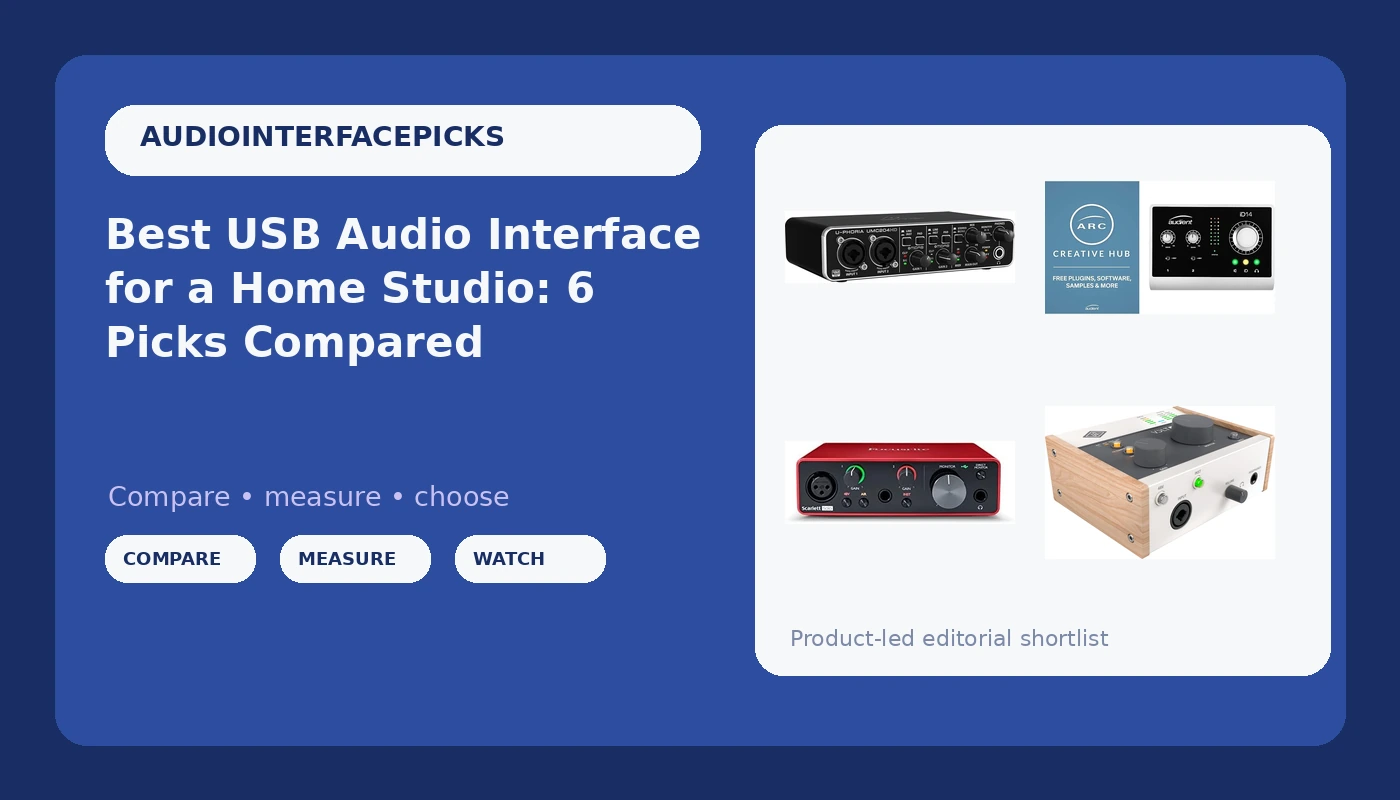
Buying an interface is the first real decision in a home studio, and it is easy to get wrong in both directions. Buy too little and you spend your sessions fighting a noisy preamp and a headphone output that gives up before your headphones do. Buy too much and you have paid for inputs that will never see a cable. The point of this guide is to narrow the field to the best USB audio interface options for the way most people actually record: one or two sources at a time, in a room that is not a studio, on a computer that is also doing everything else.
The six models below cover that range, from a compact interface built around a single source to a 10-in/4-out unit with dedicated monitor control. Two of them come from Focusrite, which tells you something about how often the Scarlett line comes up in this conversation. None of them needs a rack, and all of them are current models you can still buy new.
Related: How to Set Gain Staging on a Budget Audio Interface
Quick answer
The Focusrite Scarlett 2i2 4th Gen USB-C Audio Interface is the strongest fit for a first serious home studio because its two-input, two-output USB-C layout handles a microphone and an instrument at the same time without adding channels you will not use. Choose the Universal Audio Volt 176 USB Audio Interface instead when you want a single-source setup from a brand with a deep modeling heritage, or the Audient iD14 when you need more inputs and front-panel monitor control.
USB audio interfaces worth comparing
The list runs roughly from simplest to most expandable in terms of what you can plug in at once. Each card links to the exact product shown.
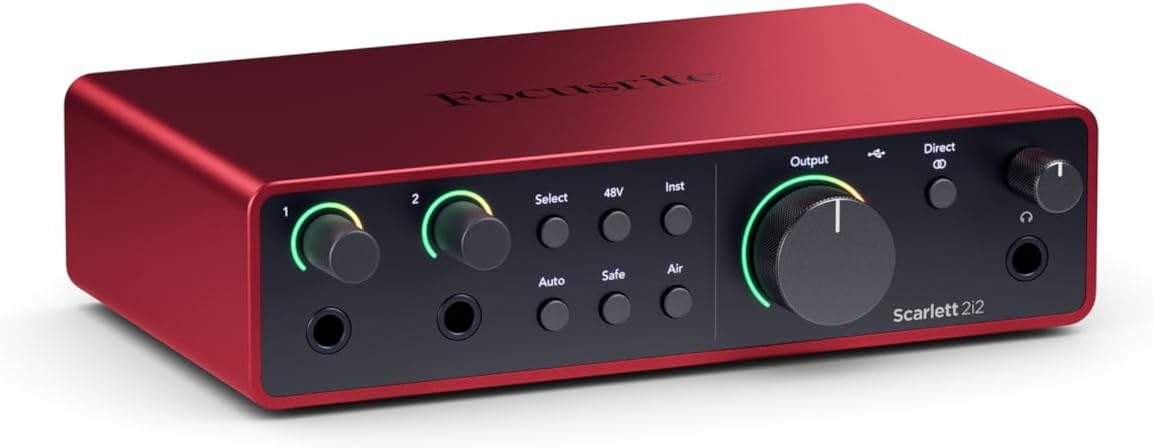
Focusrite Scarlett 2i2 4th Gen USB-C Audio Interface
The two-input, two-output USB-C model in Focusrite's Scarlett line. It is the most balanced starting point here for a desk that records a microphone and an instrument, and it is the interface most people mean when they ask for something simple that will not need to be relearned.
Visit on Amazon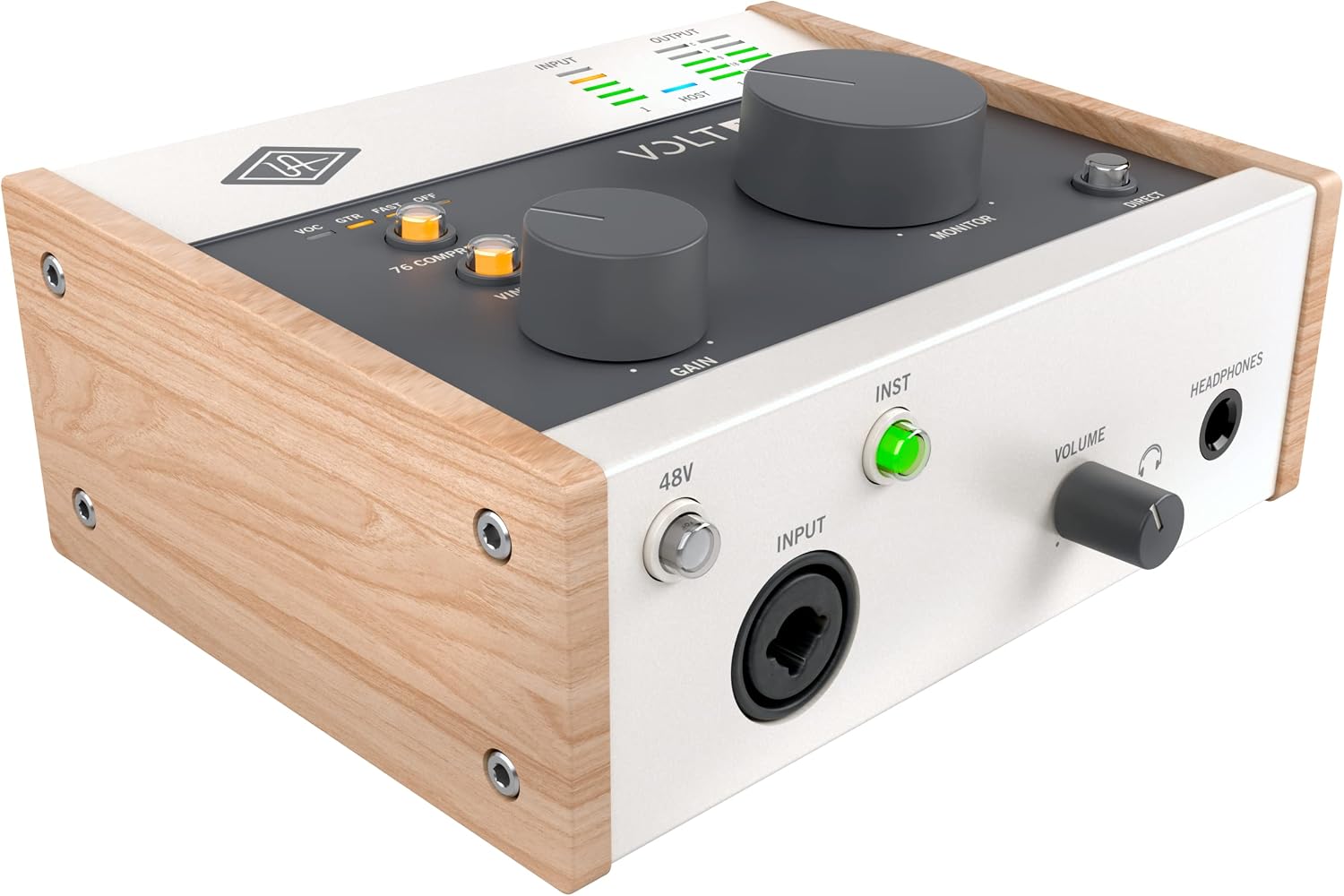
Universal Audio Volt 176 USB Audio Interface
Universal Audio's USB interface in the Volt family, and a compact option for a single-source setup where the brand's modeling heritage matters more than channel count.
Visit on Amazon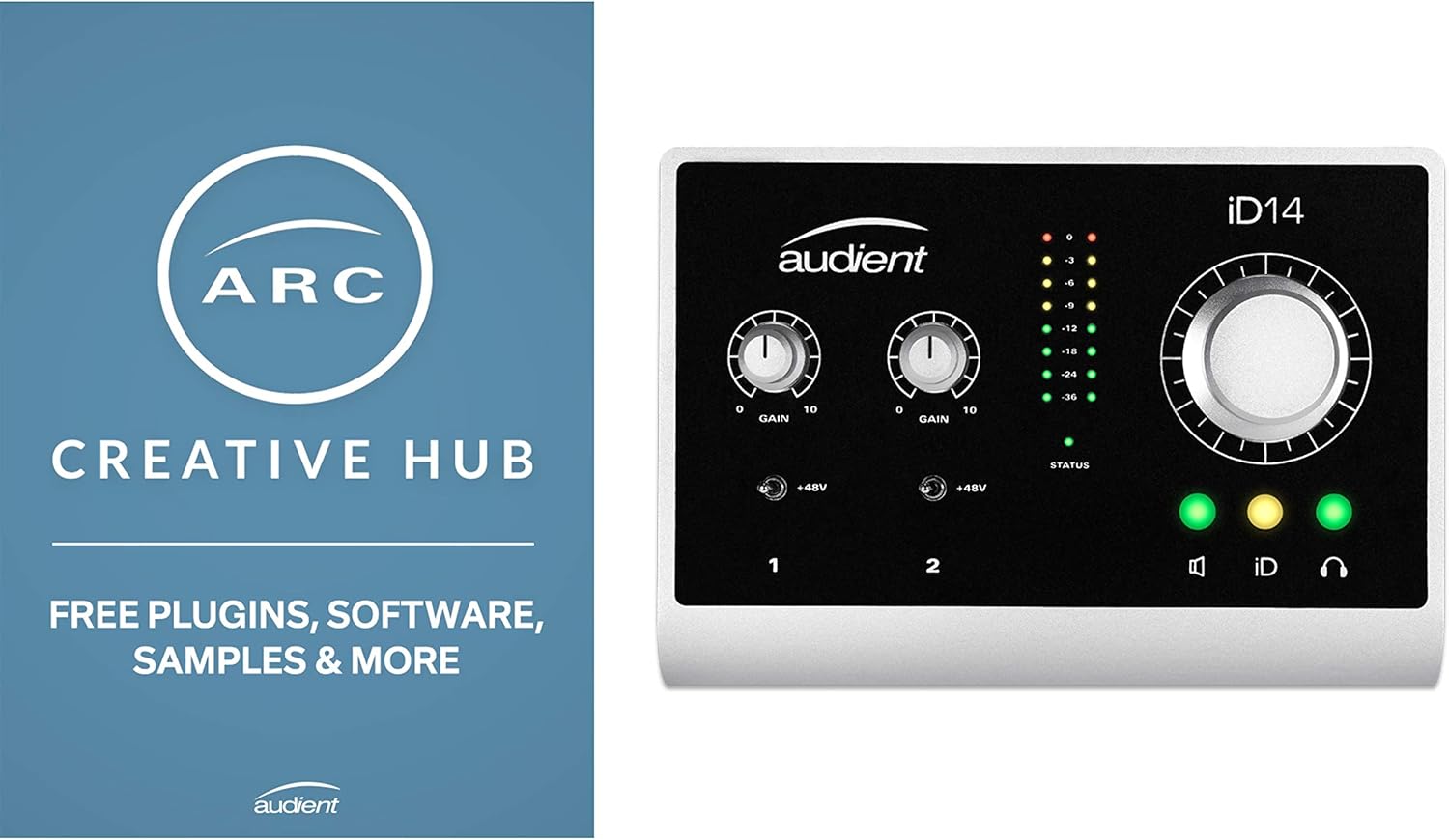
Audient iD14 USB Audio Interface with Microphone Preamp, 10 in/4 Out, 48 Volt Phantom Power, Monitor Mix & Panning, 6.3 mm Jack Out, AD/DA Converter
Check current Amazon price
A 10-in/4-out USB interface with a microphone preamp, 48 volt phantom power, monitor mix and panning, 6.3 mm jack outputs, and AD/DA conversion. It is the most expandable unit on this list.
Visit on Amazon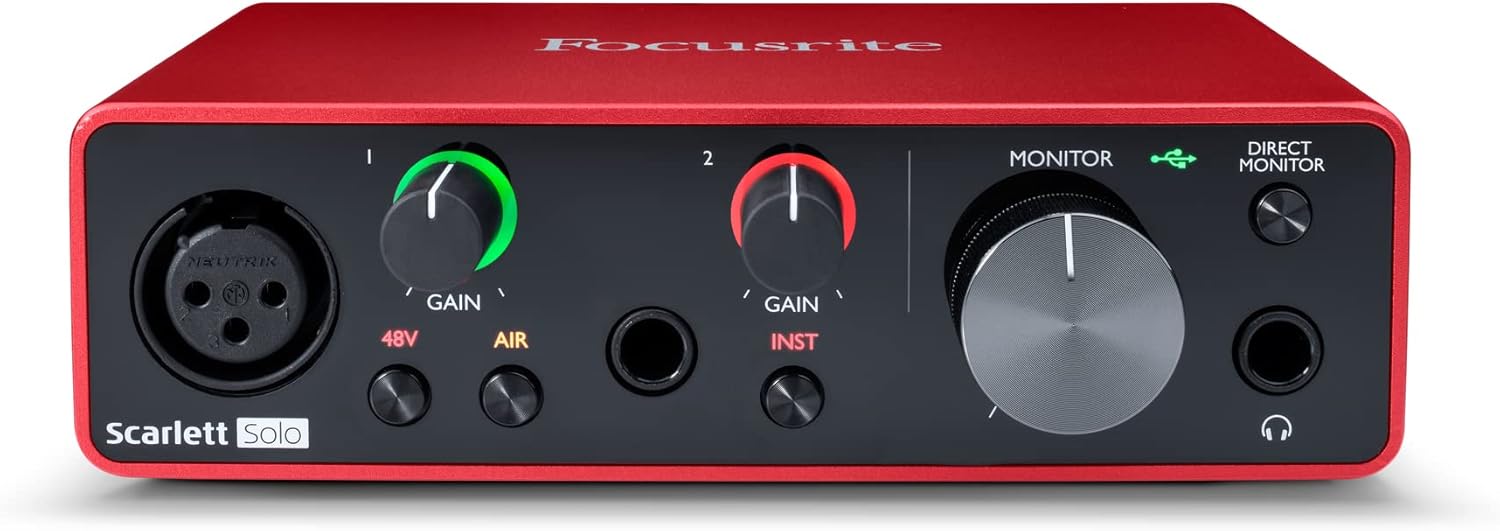
Focusrite Scarlett Solo 3rd Gen USB-C Audio Interface
The smallest Scarlett here, and a USB-C interface for a desk built around one source at a time. It is the sensible answer when you already know you will never need two inputs live.
Visit on Amazon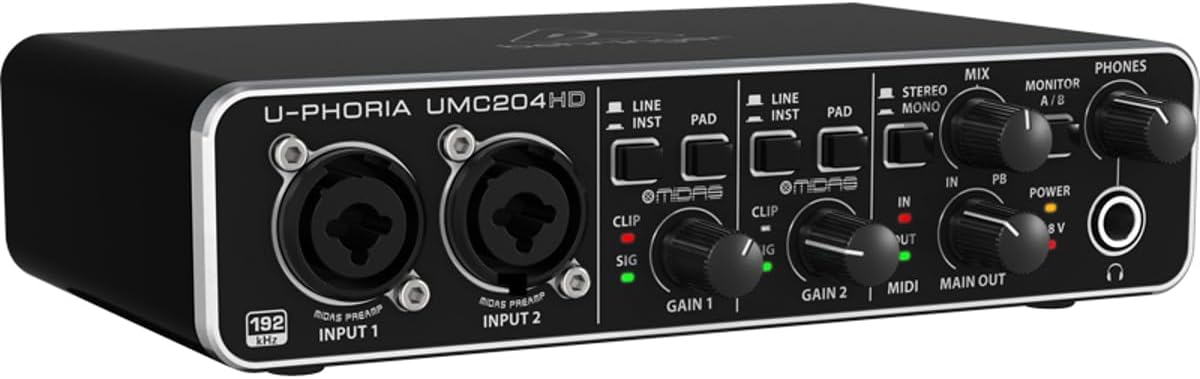
Behringer UMC204HD Audiophile 2x4, 24-Bit/192 kHz USB Audio/MIDI Interface with Midas Mic Preamplifiers | For Recording Microphones and Instruments
A 2x4 USB audio and MIDI interface running at up to 24-bit/192 kHz, with Midas-designed microphone preamplifiers. The MIDI input and output make it the natural pick when a keyboard or controller is part of the setup.
Visit on Amazon
MAONO PS22 Lite USB Audio Interface for PC for Guitar & Vocals Streaming
A USB interface for PC aimed at guitar and vocal streaming, with a compact footprint and a direct path from instrument to computer.
Visit on AmazonPrices and availability may change. Check the retailer for current details.
How these products were compared
This guide compares preamp design and usable gain range, input and output count, driver support and latency behavior, headphone output, and power and connectivity. Product names, images, and retailer links are matched to the same product record so that every card points to the product shown.
Specifications on a page only get you so far. Two interfaces can share a converter chip and still behave very differently at three o'clock on the gain knob, and the difference usually shows up in the driver rather than the hardware. That is why channel count is treated here as a starting point for the comparison, not the finish line. An interface with the right number of inputs and a stable driver beats one with extra inputs and a driver you have to fight every time the machine reboots.
How to choose the right audio interface
Start with the busiest session you realistically record, then count inputs. If that session is you, one microphone, and one guitar, two inputs is the correct answer and everything above that is money spent on silence. If a condenser microphone is anywhere in your plans, confirm the interface supplies 48 volt phantom power, because that is not a feature you can add later. If a keyboard or controller is part of the setup, decide up front whether you want MIDI input and output built into the interface or handled by a separate adapter.
Then think about how the interface is powered and how it behaves under load. A USB bus powered unit is convenient, but a hungry condenser microphone on a flaky laptop port is a gamble, and the same is true of a bus powered interface sharing a hub with an external drive. Headphone output matters more than the marketing suggests, because a weak headphone amp is the first thing that makes a working setup feel cheap. Finally, treat the driver as part of the purchase. Latency is a driver story as much as a chip story, and a great converter with poor drivers is a paperweight. If your levels are fighting you before you ever hit record, the fix is usually gain staging rather than a new box, which is worth reading up on before you spend anything.
Focusrite Scarlett 2i2 4th Gen USB-C Audio Interface
The 2i2 4th Gen is the middle of the road answer that is usually the right one. Two inputs means you can leave a microphone on input one and keep a guitar or a keyboard on input two without unplugging anything, and two outputs cover a pair of monitors with nothing left over to confuse you. The USB-C connection is the current standard, so the cable you already own for a phone or a hard drive is the same cable you need here. For a first interface that has to survive a few years of changing plans, that combination is hard to argue with.
Where it gives ground is channel count. If you are tracking a drum kit, a full band, or a podcast with more than two people in the room, two inputs run out quickly, and the Audient iD14 on this list covers that ground with a 10-in/4-out layout and front-panel monitor mix and panning. The 2i2 is also not the least expensive box here. What it buys you instead is a layout you will not have to relearn when your sessions get more complicated.
Alternatives to consider
The Universal Audio Volt 176 USB Audio Interface is better suited to a single-source setup where you would rather start inside Universal Audio's ecosystem, while the Audient iD14 USB Audio Interface is a stronger fit when you need more inputs, 48 volt phantom power for a condenser, and monitor mix and panning on the front panel.
The Behringer UMC204HD, the Focusrite Scarlett Solo 3rd Gen, and the MAONO PS22 Lite cover the rest of the range. The Behringer brings 24-bit/192 kHz conversion and MIDI input and output to the table, which makes it the one to pick when a keyboard or controller lives on your desk. The Scarlett Solo is the simplest route into the Focusrite line for a desk built around one source at a time. The MAONO PS22 Lite is the streaming-first option, built for guitar and vocals going straight into a PC.
Day-to-day use and maintenance
Most of the work happens before you press record. Set input gain so the loudest part of a take sits comfortably below clipping, then leave the knob alone. Riding gain mid-performance is how a single track ends up sounding like two different rooms. If your interface offers phantom power, switch it on only for the microphones that need it and switch it off before you repatch anything.
Physically, treat the front panel like the fragile part it is. Headphone jacks and gain knobs take the most abuse, and a crackling jack is one of the most common ways a working interface gets retired early. Strain-relieve your cables so a trip over a cord pulls the plug rather than the port, and if the interface is USB bus powered, plug it into a port that is not shared with an external drive. Keep drivers current, because on Windows especially the driver is the difference between usable round-trip latency and a session spent compensating.
Buying checklist
- Count the inputs your busiest realistic session needs, then stop counting.
- Confirm the interface supplies 48 volt phantom power if you record condensers.
- Check whether the unit is USB bus powered or needs its own power supply.
- Decide whether you want MIDI input and output built in for a keyboard or controller.
- Confirm that the exact model you are looking at includes the features you are counting on.
- Verify the current retailer price, availability, and return terms before you buy.
Final recommendation
Choose the Focusrite Scarlett 2i2 4th Gen USB-C Audio Interface when you want two inputs, USB-C, and a layout you will not outgrow in a year. Choose the Audient iD14 USB Audio Interface when you need more channels, phantom power, and front-panel monitor control, or the Universal Audio Volt 176 USB Audio Interface when a single-source setup inside Universal Audio's ecosystem is what you are after.
If MIDI is part of your workflow, the Behringer UMC204HD covers microphones, instruments, and a keyboard in one box. The Focusrite Scarlett Solo 3rd Gen is the right call for a one-source desk, and the MAONO PS22 Lite is the streaming-first pick for guitar and vocals into a PC.