I have a drawer full of dead interfaces. Fried headphone jacks, a USB port that stopped negotiating with a laptop halfway through a session, a phantom power circuit that started humming at 3 a.m. during a two-person podcast. Ten years of recording in Nashville, everything from solo demos to full bands, and the same lesson keeps repeating: the box you plug your microphone into is the least glamorous and most decisive purchase in a home studio.
This comparison of budget USB audio interfaces covers four very different answers to the same question. Two of them are real interfaces with real preamps and phantom power. Two of them are pocket adapters built to get a guitar or a phone into a recording app. They are not direct competitors, and that is exactly why putting them side by side is worth your time: it shows you where the money goes, and what quietly disappears when you spend less.
Related: USB Audio Interface Latency Explained
For most people reading this, the Fender Quantum LT2 is the pick of the group, and the Focusrite Scarlett Solo Studio bundle is the right call if you do not own a microphone or a pair of headphones yet. The two cheaper units earn their place only when you have a specific job for them.
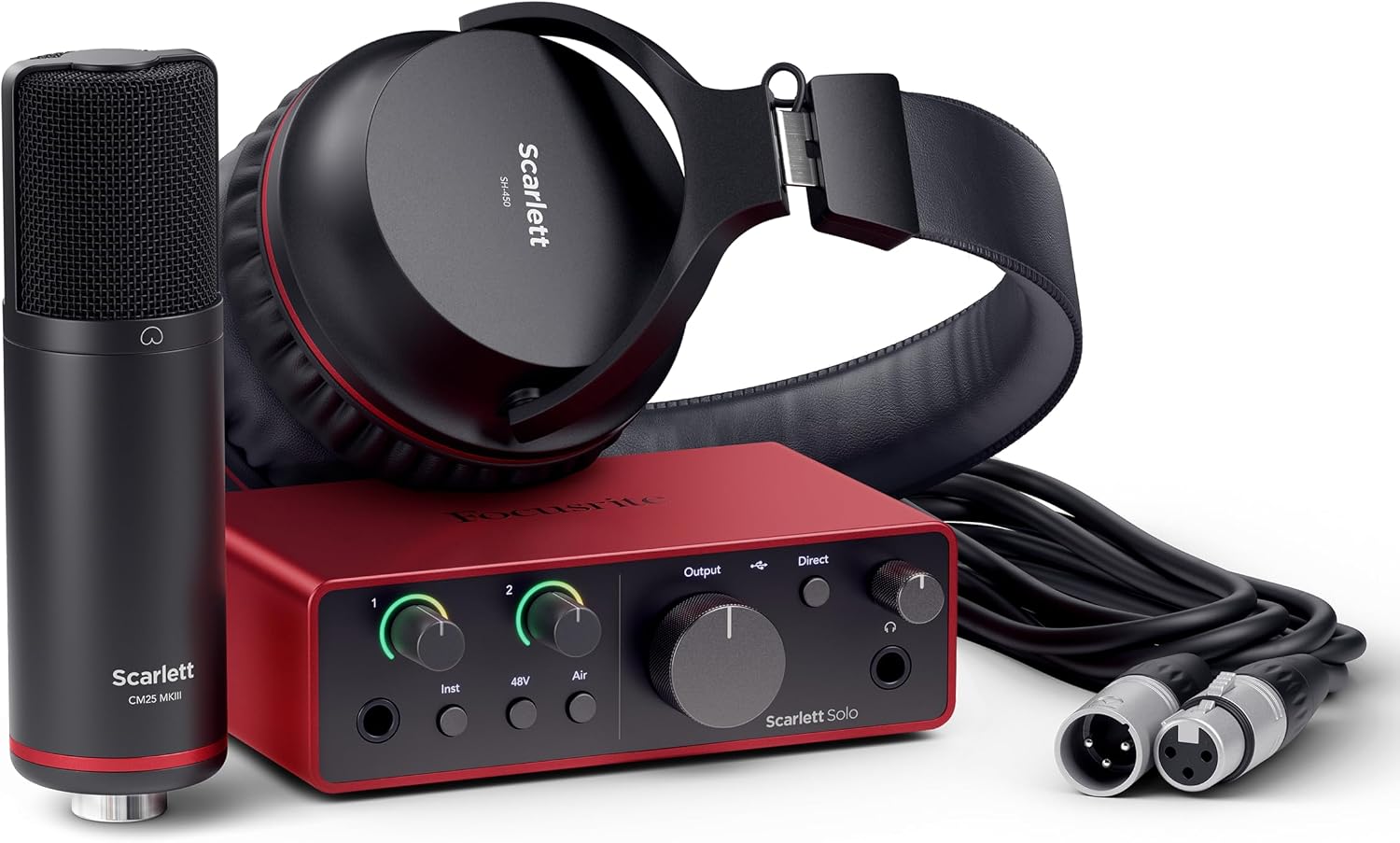
Focusrite Scarlett Solo Studio 4th Gen USB-C Audio Interface Bundle
Complete chain in one box: interface, microphone, headphones, and cables
Single input, and the accessories carry part of the cost
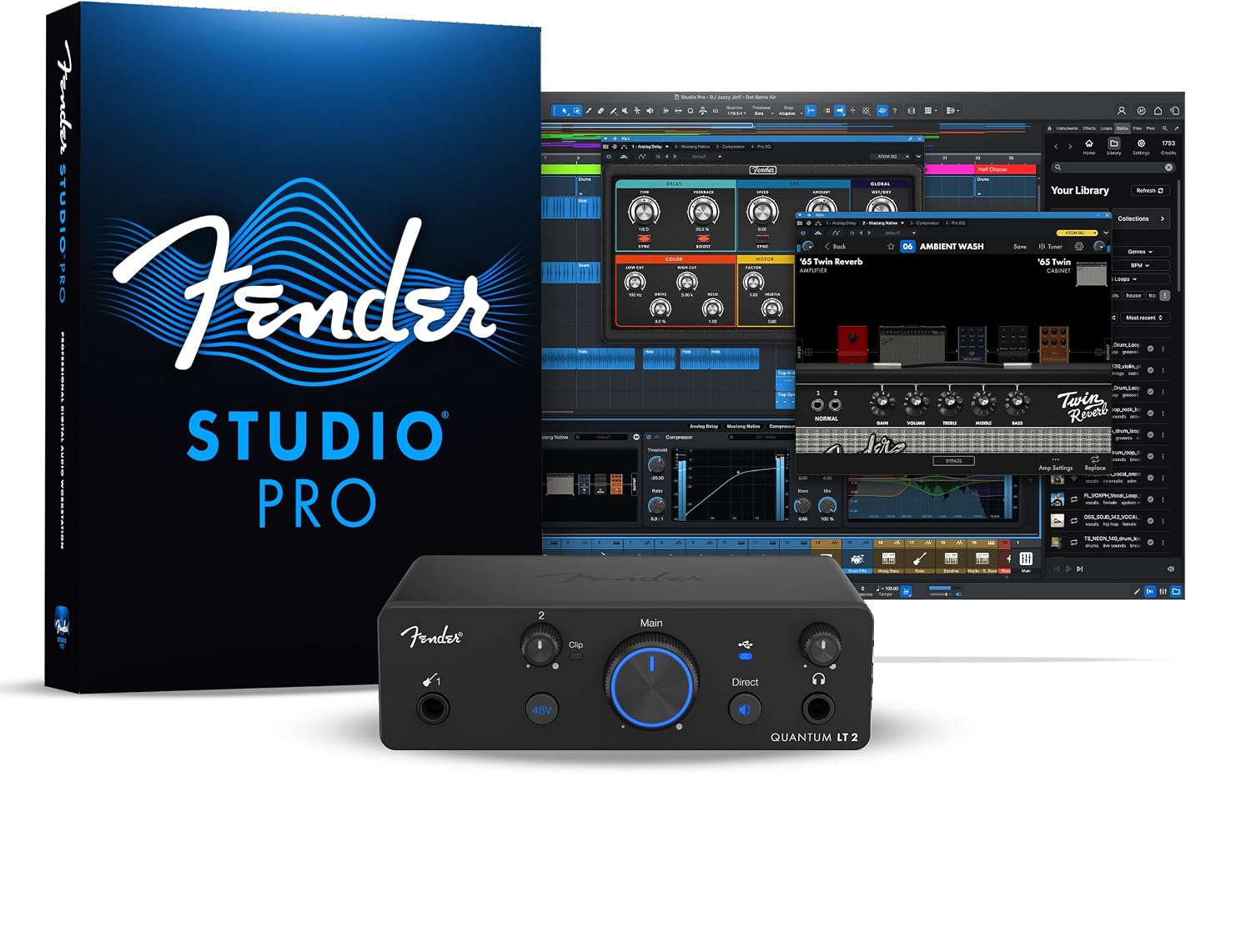
Fender Quantum LT2 USB Audio Interface
Two inputs plus a guitar-friendly software path with the Fender Studio app and FX pack
No microphone or headphones included, and the workflow leans on Fender's app
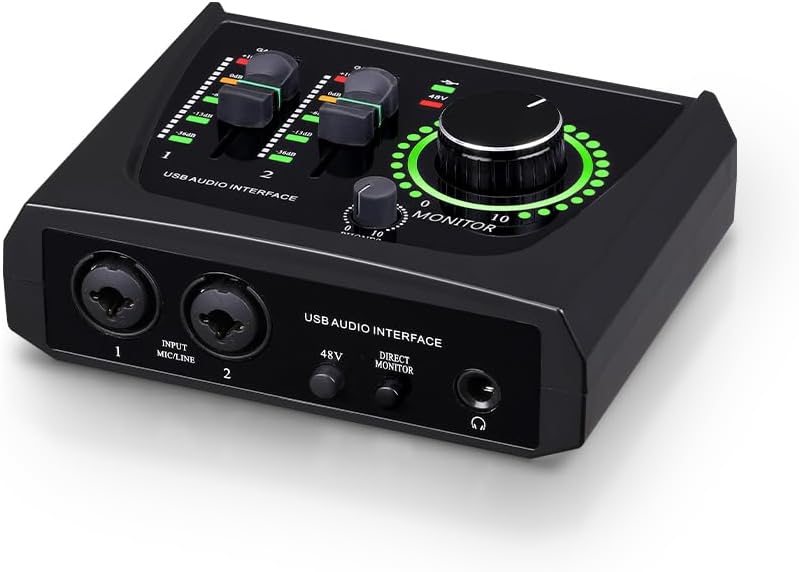
BOMGE mini 2 Channel USB Audio Interface
Two channels and an XLR input with 48V phantom power at the bottom of the market
Driver polish and the headphone output are where the savings show
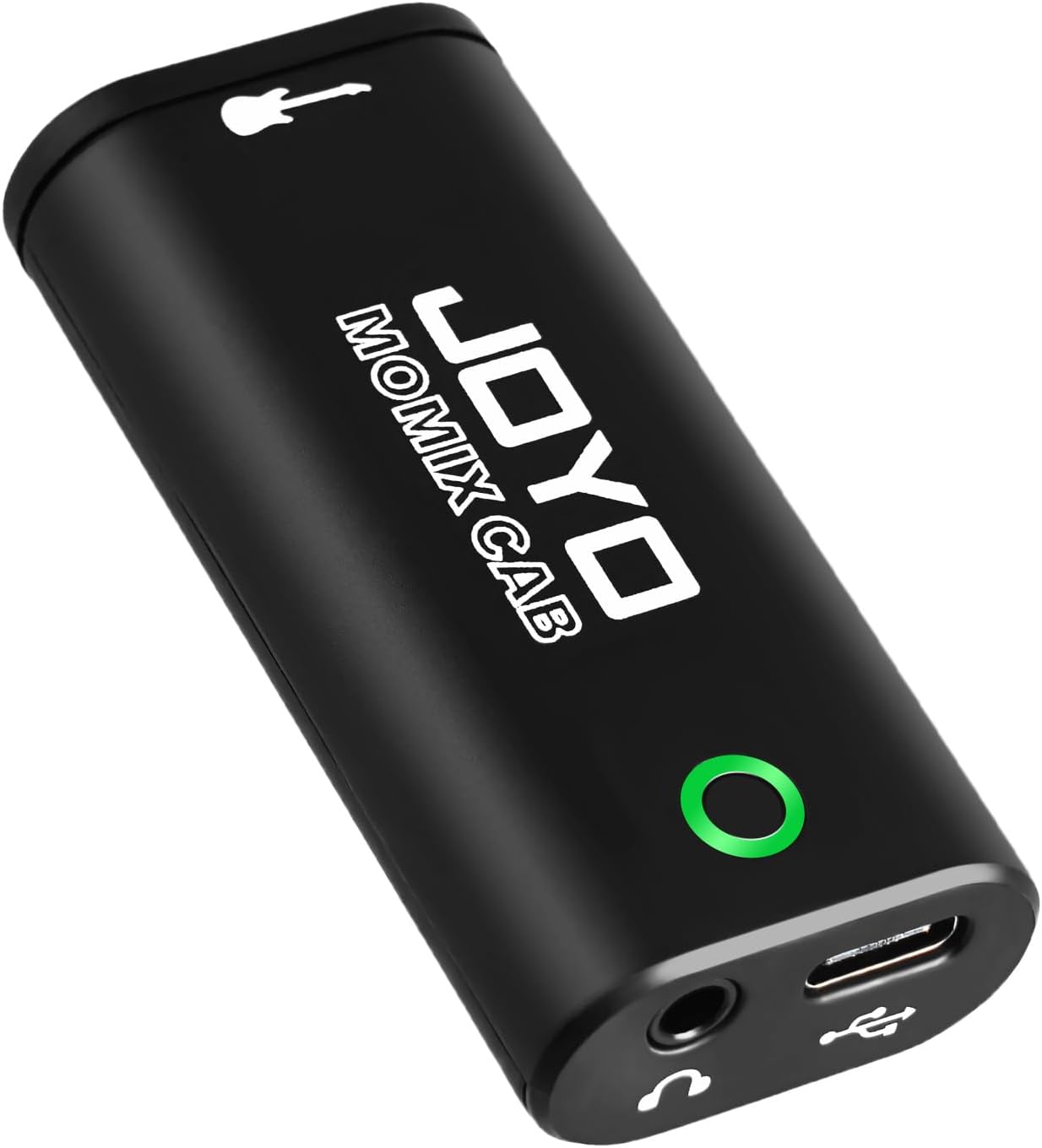
JOYO Guitar Audio Interface MOMIX CAB
Pocket size, direct monitoring, and USB-C plus Lightning for phone recording
No XLR and no phantom power, so microphones are out
Prices and availability were captured from Amazon Creators API and may change.
What I judge a budget interface on
Four things, in this order.
Gain staging. The preamp is the interface. Two boxes with near-identical spec sheets can sound completely different with the same ribbon mic at the same setting, because one stays clean when the gain is at 3 o'clock and the other turns gritty at noon. Clean gain at high settings is the spec that never makes it onto the box.
Drivers. Latency is about drivers, not just the converter chip. A great chip with terrible drivers is a paperweight, and the failure mode is ugly: settings that reset on reboot, dropouts when the CPU spikes, a device that vanishes from the audio menu when you unplug a hub. I have not measured round-trip latency on these four units, so I will not quote you a number. What I can tell you is that driver reputation is the best available predictor of whether an interface is still pleasant to use in month six.
The headphone amp. It gets ignored until it clips, and then it is the most important spec on the box. If you mix on 250-ohm cans, a weak output makes you turn everything up until you are hearing distortion instead of detail.
Phantom power. Binary, but decisive. Either the box supplies 48V or it does not, and if you own a condenser microphone, the answer has to be yes.
Focusrite Scarlett Solo Studio 4th Gen USB-C Audio Interface Bundle
The bundle is the argument here. Interface, microphone, headphones, and the cables to connect them, all in one order. If you have never recorded anything, that removes three separate research projects from your week and gets you to a take faster than any spec sheet will. The Scarlett line has been the default first interface for a decade, and the boring part is the compliment: the drivers behave, the box shows up in your DAW, and you stop thinking about it.
The trade-off is flexibility. This is a single-input interface, so a two-person podcast or a guitar-and-vocal take at the same time is off the table. You are also paying for accessories as much as for conversion, and if you already own a decent mic and a pair of headphones, part of that bundle is duplicated gear. For a beginner with nothing, that is a feature. For anyone with a mic locker, it is overhead.
Fender Quantum LT2 USB Audio Interface
Two inputs is the practical difference between this and the Scarlett Solo, and it is a bigger difference than it looks. Two inputs means a vocal and a guitar at once, or two people on one podcast, or a stereo keyboard. That is the line between a practice rig and a room you can actually work in.
The Fender leans on software: the Fender Studio app plus an amp and FX pack. I am usually suspicious of bundled software as a headline feature, because too often you are buying a license rather than hardware. Here it is closer to the point of the product. If you are a guitarist who wants to record through amp models without assembling a plugin collection, that path is genuinely shorter. What it loses is everything not in the box: no microphone, no headphones, and a workflow that asks you to buy into Fender's ecosystem. The hardware is the two-input core, and that core is the strongest thing in this comparison.
BOMGE mini 2 Channel USB Audio Interface
This is the cheap box that behaves like a real interface. Two channels, an XLR input with 48V phantom power, and USB. That phantom power line is what separates it from the pocket adapters below: it is the least expensive unit here that can actually feed a condenser microphone.
At this end of the market, drivers and shielding are where the money was saved. Budget an evening for installation and troubleshooting, and expect the headphone output to be the first thing you outgrow. It is a fine second interface, a decent travel backup, or a first interface for a teenager who wants to learn on something that will not bankrupt the household. It is a frustrating only interface if you are trying to run sessions, and I would not pretend otherwise.
JOYO Guitar Audio Interface MOMIX CAB
This is not an interface in the same category as the other three, and reviewing it as one would be unfair to it. It is a pocket adapter with a 6.35mm instrument input, a 3.5mm headphone output, direct monitoring, and both USB-C and Lightning connections. That last detail is the real feature: it plugs into a phone or a tablet without a dongle, which is where a lot of guitar ideas actually get recorded.
For a guitarist who wants to practice through an amp sim at midnight, or hum a riff into a notes app before it evaporates, this does the job with nothing else in the chain. What it loses is everything a session needs. No XLR, so no microphone. No phantom power, so no condenser. Nothing here is going to capture a vocal take you intend to keep. It is a tool for a moment, and it is good at that moment.
Do you need two inputs?
This is the question that decides most purchases, and the answer is usually yes, eventually. A single input handles one microphone at a time. That is fine for a solo singer-songwriter, fine for voiceover work, fine for a guitarist overdubbing one part at a time. It stops being fine the moment a second person sits down, whether that is a guest on a podcast or a friend with a guitar.
If you can stretch to two inputs, buy two inputs. Nobody has ever regretted a spare channel, and the resale argument is real: two-input interfaces hold their place in a rig far longer than single-input boxes do. The Focusrite bundle and the Fender Quantum LT2 are on opposite sides of that line, and it is the first thing I would decide before looking at anything else.
The trade-offs, stated plainly
- Focusrite Scarlett Solo Studio bundle: buys convenience and a complete signal chain, gives up a second input and puts part of the money into accessories.
- Fender Quantum LT2: buys two inputs and a guitar-friendly software path, gives up the microphone and headphones you will still need to buy.
- BOMGE mini 2 channel: buys a working XLR input with phantom power at the bottom of the market, gives up driver polish and a headphone amp you will fully trust.
- JOYO MOMIX CAB: buys portability and phone compatibility, gives up XLR, phantom power, and any claim to session work.
That list is the whole decision. Everything else on a product page is marketing.
Which one should you buy
If you own nothing: the Focusrite bundle. You will be recording within an hour of the box arriving, and the included gear is competent enough that you will not need to replace it to make a decent demo.
If you already own a microphone and headphones: the Fender Quantum LT2. Two inputs, a guitarist-friendly software path, and no paying twice for accessories.
If you are on a tight budget and own a condenser mic: the BOMGE mini. It is the cheapest route here to phantom power and two channels. Go in knowing you are trading polish for price.
If you record riffs on your phone: the JOYO. It is not a studio interface, and it is not pretending to be one.
What I will not compromise on
USB bus power is fine until it isn't. Phantom power for a hungry condenser on a flaky laptop port is a gamble, and if an interface wants a separate power supply to deliver 48V reliably, that is not a flaw, it is honesty about physics. The same goes for the headphone jack. A jack that crackles at low volume is not a minor annoyance, it is the part of the box you will touch every single session.
And skip anything that sells a bundled "pro" DAW as the headline feature. You are paying for the license, not the hardware, unless the software does something you would otherwise pay for anyway. That is why the Fender's amp and FX pack gets a pass here and a generic DAW license would not.
The honest summary
None of these four will make you sound professional. The interface is roughly 10% of what a recording sounds like, and I say that as someone who has spent a decade caring about the other 90%: the room, the mic placement, the performance, and the gain staging. What a good interface does is get out of the way, stay out of the way for years, and never make you think about it during a take.
That is the bar. The Fender Quantum LT2 clears it with two inputs. The Focusrite bundle clears it with everything in the box. The BOMGE clears it if you are patient with drivers. The JOYO clears it for one specific job, on a phone, on a couch, at midnight. Pick the one that matches the job you actually have, not the one you imagine having.