Choosing among the best audio interfaces for a home studio comes down to fewer things than the spec sheets suggest. You need enough clean inputs for the way you actually record, a driver your computer cooperates with, and monitoring you can trust at the volume you work at. Everything else is a bonus.
The six units here span a wide range. There is a pocket-sized guitar interface that plugs straight into a phone, a two-channel budget box with phantom power, a bundled first-interface kit, a rack-sized multi-input workhorse, a Fender interface with ADAT and S/PDIF expansion, and a Thunderbolt 3 studio hub. None of them is right for every session, and that is the point. Match the interface to the number of microphones you record at once and to the ports your machine already has, and the decision gets simple fast.
Related: USB-C Audio Interfaces Under $300: What Actually Matters
Quick answer
The Focusrite Scarlett Solo USB-C Audio Interface (4th Gen) Bundle with Polsen HPC-A30 Studio Monitor Headphones, Pop Filter and XLR-XLR Cable is the strongest fit for a first home recording setup because it pairs a current-generation USB-C Scarlett interface with the headphones, pop filter, and microphone cable most people end up buying separately. Choose the Fender Quantum HD 2 instead when you need more inputs, ADAT and S/PDIF expansion, and re-amp outputs for a production rig that is still growing.
What is worth comparing in an audio interface
Six things actually separate these products, and only a few of them show up in a headline spec.
Connectivity and power. Most of this group is USB-C, which is the safe bet for a modern laptop or desktop. The Universal Audio Apollo Twin X DUO Gen 2 uses Thunderbolt 3 instead, which is a different port and a different class of machine. The JOYO MOMIX CAB goes further in the other direction and offers both USB-C and Lightning, so it can run from a phone without a computer in the chain at all.
Input count and input type. The JOYO has a single 6.35mm instrument input. The BOMGE mini and the Scarlett Solo bundle sit at the two-channel end. The Scarlett 18i20 and the Fender Quantum HD 2 are built for sessions where several sources are recorded at once. Count the microphones you genuinely track simultaneously, not the ones you own.
Phantom power. Condenser microphones need 48V. The BOMGE mini lists XLR input with 48V phantom power, and the Scarlett and Fender units cover the same ground as part of their mic input design. If you only ever record a dynamic mic or a guitar, this matters less.
Expansion. The Fender Quantum HD 2 is the one with ADAT and S/PDIF I/O, plus loopback and re-amp outputs. That combination is what lets you add channels later or feed external converters without replacing the interface.
Monitoring. Direct monitoring, a headphone output, and a dedicated headphone amp are the specs that decide whether tracking feels comfortable. The JOYO lists direct monitoring with a 3.5mm headphone out. The Fender lists a headphone amp and loopback. Loopback is the feature that makes streaming and podcast routing painless.
What comes in the box. The Scarlett Solo bundle includes Polsen HPC-A30 studio monitor headphones, a pop filter, and an XLR to XLR cable. The Apollo Twin X DUO Gen 2 ships with the UAD Analog Classics plugin bundle. Bundles are worth counting, because a $99 interface plus $80 of accessories is not really a $99 interface.
Audio interfaces worth comparing
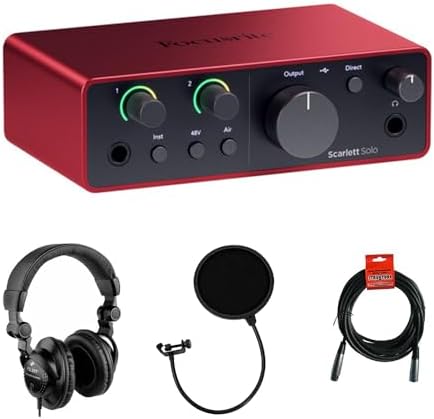
Focusrite Scarlett Solo USB-C Audio Interface (4th Gen) Bundle with Polsen HPC-A30 Studio Monitor Headphones, Pop Filter and XLR- XLR Cable
A current 4th Gen USB-C Scarlett Solo bundled with Polsen HPC-A30 studio monitor headphones, a pop filter, and an XLR to XLR microphone cable, covering the essentials of a first recording setup in one purchase.
Visit on Amazon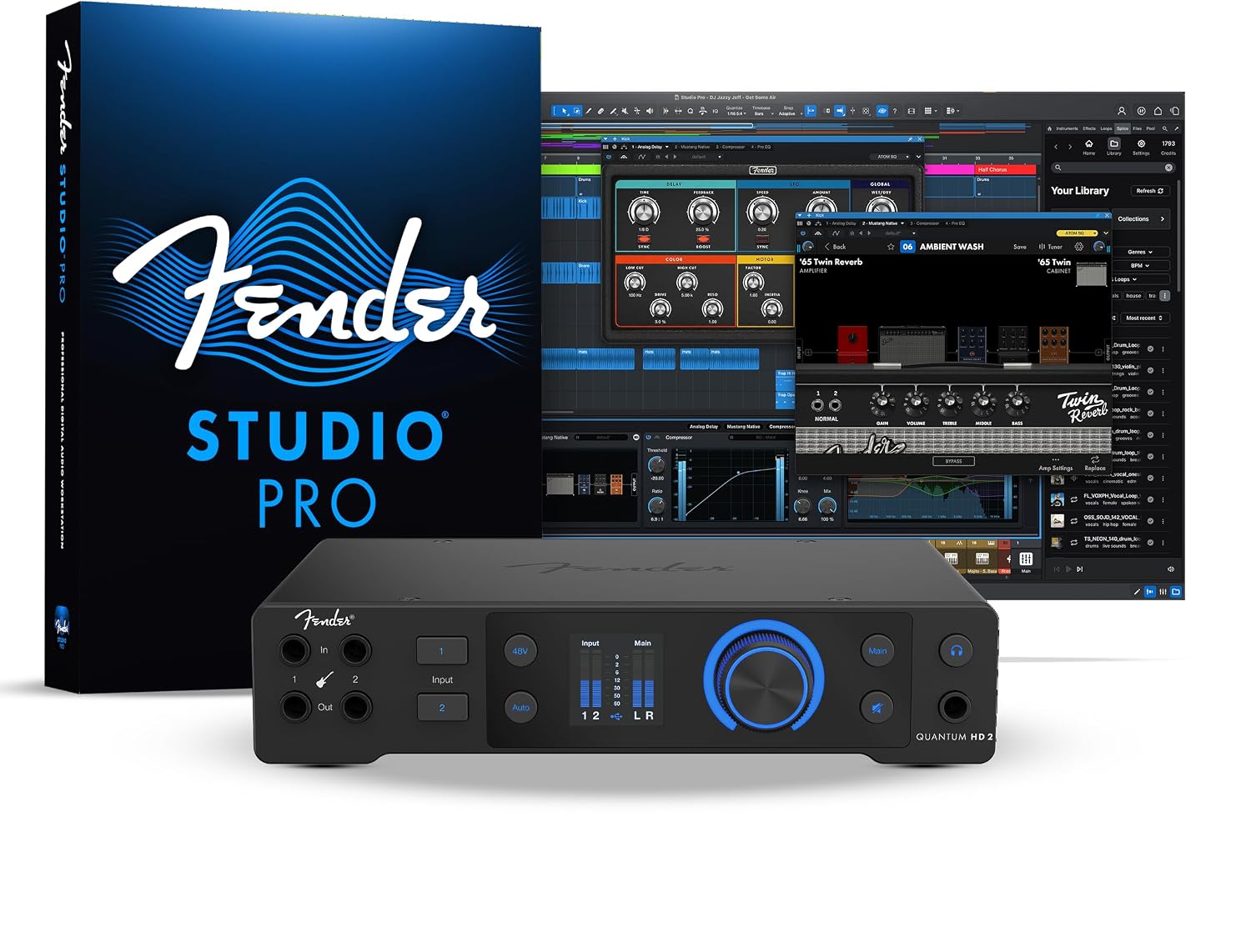
Fender Quantum HD 2 | 20x24 USB-C Audio Interface for Music Production, MAX-HD Mic Preamps, Front Instrument Inputs, ADAT & S/PDIF I/O, Auto Gain, Re-Amp Outputs, Loopback, Headphone Amp, Mac & PC
A 20x24 USB-C interface with MAX-HD mic preamps, front-panel instrument inputs, ADAT and S/PDIF I/O, auto gain, re-amp outputs, loopback, and a dedicated headphone amp, with Mac and PC support.
Visit on Amazon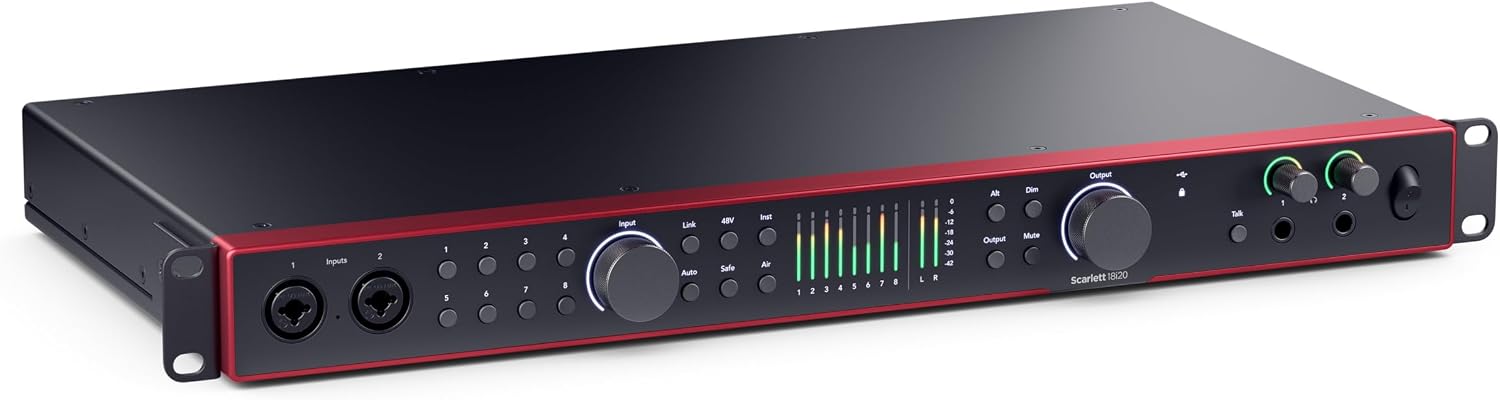
Focusrite Scarlett 18i20 4th Gen USB-C Audio Interface
The multi-input member of the current Scarlett line, a 4th Gen USB-C interface aimed at sessions that record many sources at once, such as drum tracking, a full band, or a permanent rack setup.
Visit on Amazon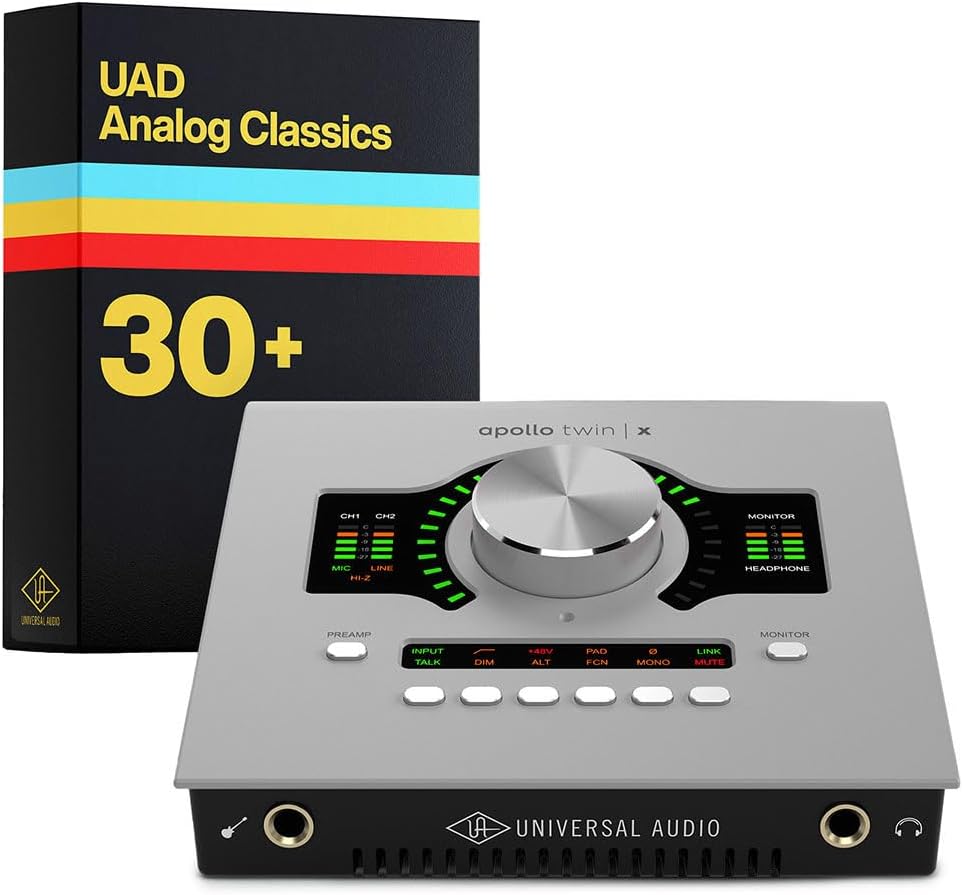
Universal Audio Apollo Twin X DUO Gen 2 with UAD Analog Classics Thunderbolt 3 Audio Interface
A Thunderbolt 3 interface from Universal Audio that includes the UAD Analog Classics plugin bundle, aimed at producers who want UAD processing available through the interface rather than in a separate box.
Visit on Amazon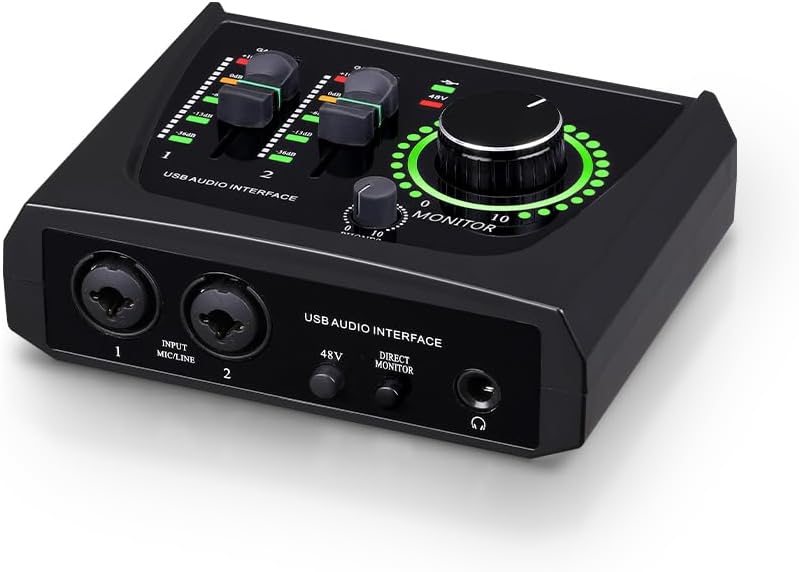
BOMGE mini 2 Channel USB Audio Interface for Recording, Streaming and Podcasting, with XLR/48V Phantom Power,Studio Quality Audio Interface for Guitarist, Vocalist, Podcaster or Producer
A two-channel USB interface with XLR input and 48V phantom power, positioned for guitarists, vocalists, podcasters, and producers who need a second or travel rig at minimal cost.
Visit on Amazon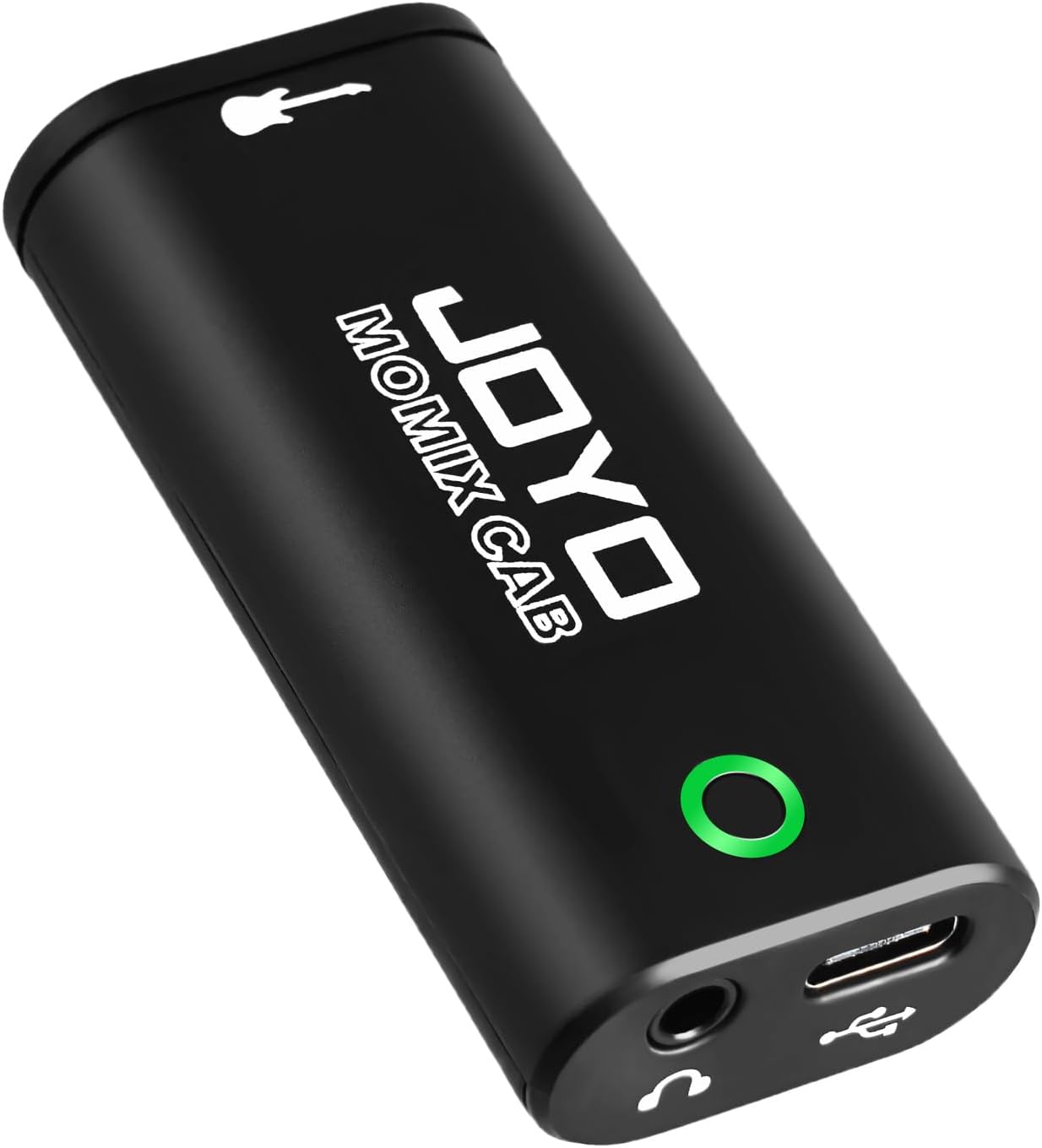
JOYO Guitar Audio Interface for Phone, Direct Monitoring with 6.35mm Input & 3.5mm Headphone Out, USB-C & Lightning Plug & Play, Portable Pocket Size (MOMIX CAB)
A pocket-size interface for guitar and phone recording, with a 6.35mm input, 3.5mm headphone output, direct monitoring, and both USB-C and Lightning connections for plug-and-play use away from a desk.
Visit on AmazonPrices and availability may change. Check the retailer for current details.
How these products were compared
This guide compares input count and input type, connectivity and how each unit is powered, expansion options such as ADAT and S/PDIF, monitoring features including direct monitoring, loopback, and headphone outputs, and what each package includes in the box. Product names, images, and retailer links are matched by product code so that every card points to the product shown.
Nothing here is presented as bench testing or measured latency figures. The distinctions come from the feature sets each manufacturer lists and from the practical question of which sessions each interface can cover. Readers should use the link on each card to confirm the current price, availability, and return terms before buying.
How to choose the right audio interface
Start with a count, not a feature list. Write down the largest number of microphones or instruments you will record at the same time in the next year. If that number is one or two, the Scarlett Solo bundle, the BOMGE mini, or the JOYO MOMIX CAB covers it, and the difference between them is mostly about whether you want a bundled kit, phantom power for a condenser, or phone compatibility. If the number is four or more, the Scarlett 18i20 and the Fender Quantum HD 2 are the two that belong on your shortlist, because both are built around recording several sources at once.
Then check the boring details. Confirm your computer has the right port: USB-C for most of this group, Thunderbolt 3 for the Apollo Twin X DUO Gen 2, and Lightning or USB-C for the JOYO if you plan to record on a phone. Confirm the interface provides 48V phantom power if you own a condenser microphone, and confirm there is a headphone output you can monitor through, since direct monitoring is what keeps you from fighting latency while tracking. If you stream or host a podcast, loopback routing on the Fender Quantum HD 2 is worth the extra cost, because it removes an entire category of cable and software workarounds. Finally, count the accessories: cables, headphones, and a pop filter are real money, and a bundle that includes them changes the value math. If you are still deciding on monitoring, our notes on choosing studio headphones for tracking cover the pairing side of the same decision.
Focusrite Scarlett Solo USB-C Audio Interface (4th Gen) Bundle
The Scarlett Solo 4th Gen is the entry point of Focusrite's current USB-C line, and the bundle version adds Polsen HPC-A30 studio monitor headphones, a pop filter, and an XLR to XLR microphone cable. For someone starting from nothing, that is a meaningful head start: a single purchase covers the interface, something to monitor on, and the cable that connects a microphone to the box.
The trade-off is input count. A Solo-class interface is built around a simple recording setup, and anyone who later wants to track a drum kit or a full band will run out of channels long before they run out of ideas. It is also the option here with the least expansion, so if you already know you need ADAT or S/PDIF, this is not the box to grow into. As a first interface that stays out of the way while you learn gain staging, it is the easiest recommendation in this group.
Alternatives to consider
The Fender Quantum HD 2 is better suited to a production rig that needs room to grow, thanks to its 20x24 USB-C design, MAX-HD mic preamps, front instrument inputs, ADAT and S/PDIF I/O, auto gain, re-amp outputs, loopback, and headphone amp. The Focusrite Scarlett 18i20 4th Gen is a stronger fit when the session itself is the priority and you need many inputs recorded at once in a rack format.
The Universal Audio Apollo Twin X DUO Gen 2, the BOMGE mini 2 Channel, and the JOYO MOMIX CAB cover the outer edges of the group. The Apollo Twin X DUO Gen 2 is the Thunderbolt 3 option with the UAD Analog Classics bundle included. The BOMGE mini is the low-cost two-channel box with XLR input and 48V phantom power for a travel or backup rig. The JOYO MOMIX CAB is the pocket option, with a 6.35mm input, 3.5mm headphone out, direct monitoring, and both USB-C and Lightning so a phone can serve as the recorder.
Day-to-day use and maintenance
Plan your desk around the interface rather than the other way around. USB-C and Thunderbolt cables take strain at the connector, so leave slack and avoid hanging the cable off the back edge of a desk. Interfaces with front-panel instrument inputs, like the Fender Quantum HD 2, are easier to patch when the box sits within arm's reach. Rack-format units such as the Scarlett 18i20 want proper rack ears and ventilation rather than a shelf in a closed cabinet.
Keep phantom power off until you have connected the microphone, and mute monitoring before you switch it on. If a condenser microphone needs 48V and your interface offers it, engage it deliberately rather than leaving it on for every session. Keep gain conservative when you are not actively tracking, and store your settings after a session so a driver update or reboot does not send you back to square one. Dust is the quiet enemy of any interface with exposed jacks, so cover open inputs when the unit is not in use.
Buying checklist
- Count the inputs you will use at once, then buy one step above that number if the budget allows.
- Confirm the port type your computer provides: USB-C, Thunderbolt 3, or Lightning for phone recording.
- Choose phantom power only if you actually own a condenser microphone that needs 48V.
- Confirm the exact bundle contents, since the Scarlett Solo package includes headphones, a pop filter, and a cable.
- Check the cleaning and handling guidance for exposed jacks and connectors.
- Verify the current retailer price, availability, and return terms before you order.
Final recommendation
Choose the Focusrite Scarlett Solo USB-C Audio Interface (4th Gen) Bundle with Polsen HPC-A30 Studio Monitor Headphones, Pop Filter and XLR-XLR Cable when you are building a first home recording setup and want the interface, monitoring, and cabling sorted in one purchase. Choose the Fender Quantum HD 2 when you need more inputs, ADAT and S/PDIF expansion, loopback, and re-amp outputs, or the Universal Audio Apollo Twin X DUO Gen 2 when Thunderbolt 3 and the included UAD Analog Classics bundle match how you already work. If your sessions are small, mobile, or built around a phone, the JOYO MOMIX CAB and the BOMGE mini 2 Channel cover those cases at the other end of the scale.