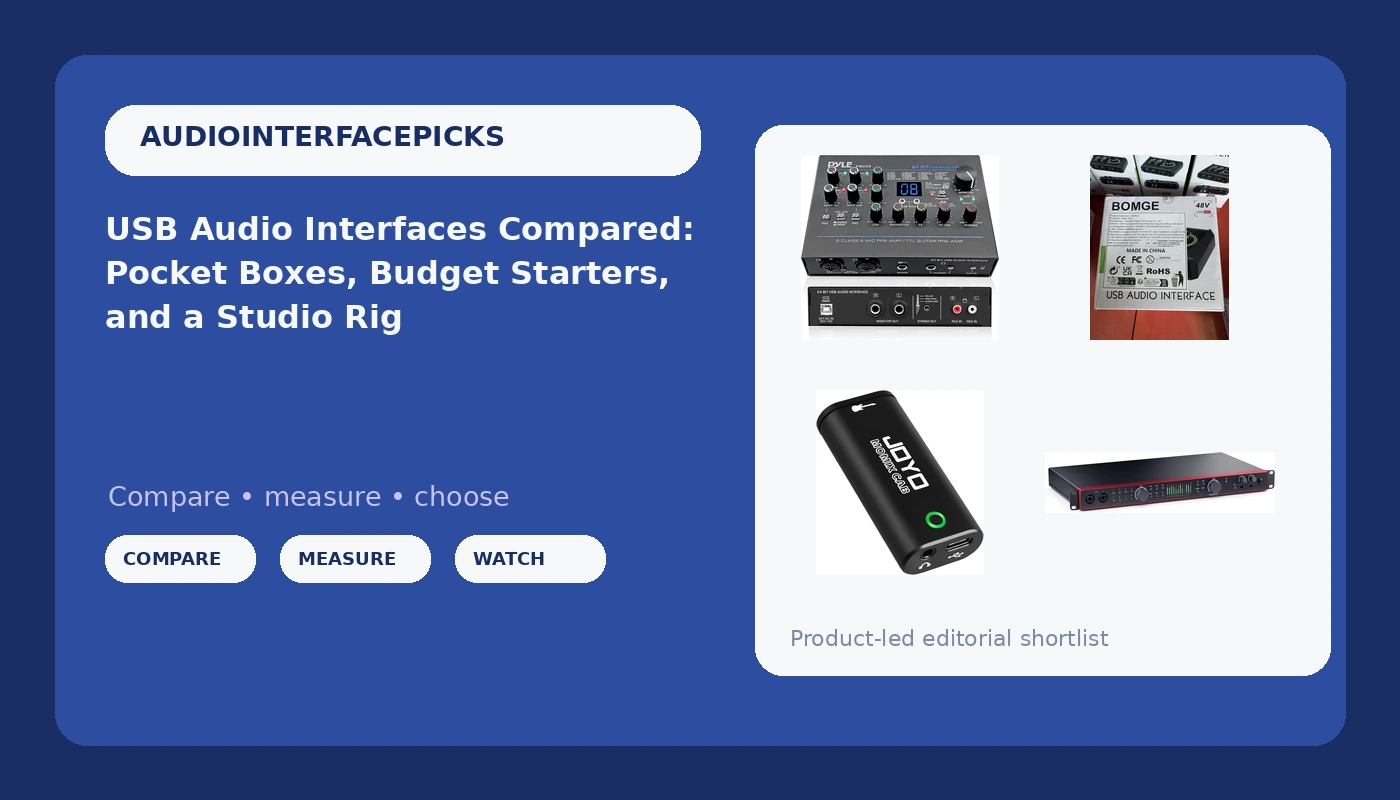
I bought my first interface for $99 because a drummer I was tracking told me my demos sounded like they'd been recorded through a sock. He was right, and the fix wasn't a better microphone. It was a box with a decent preamp and a driver that didn't fall over. Ten years later, I still keep a drawer of failed interfaces with fried headphone jacks, and I still keep the boring ones on the desk. This USB audio interface comparison covers four units that live in four completely different lanes: a pocket box that plugs into a phone, a two-channel starter, a mid-priced desktop unit with onboard effects, and a rack-sized studio interface. Nobody should buy all four. Almost everybody reading this should buy exactly one.
Related: Gain Staging on a Budget Interface: How to Set Levels Without Clipping
The best pick for most home recorders here is the two-channel BOMGE mini, because it's the cheapest unit in this group that gives you a real XLR input and 48V phantom power, which is the line between a toy and a tool. The other three make sense for specific people: the JOYO for guitarists who write on a phone, the Pyle for players who want effects and lots of connectors on a desktop, and the Focusrite for anyone building a room around an interface instead of the other way around.
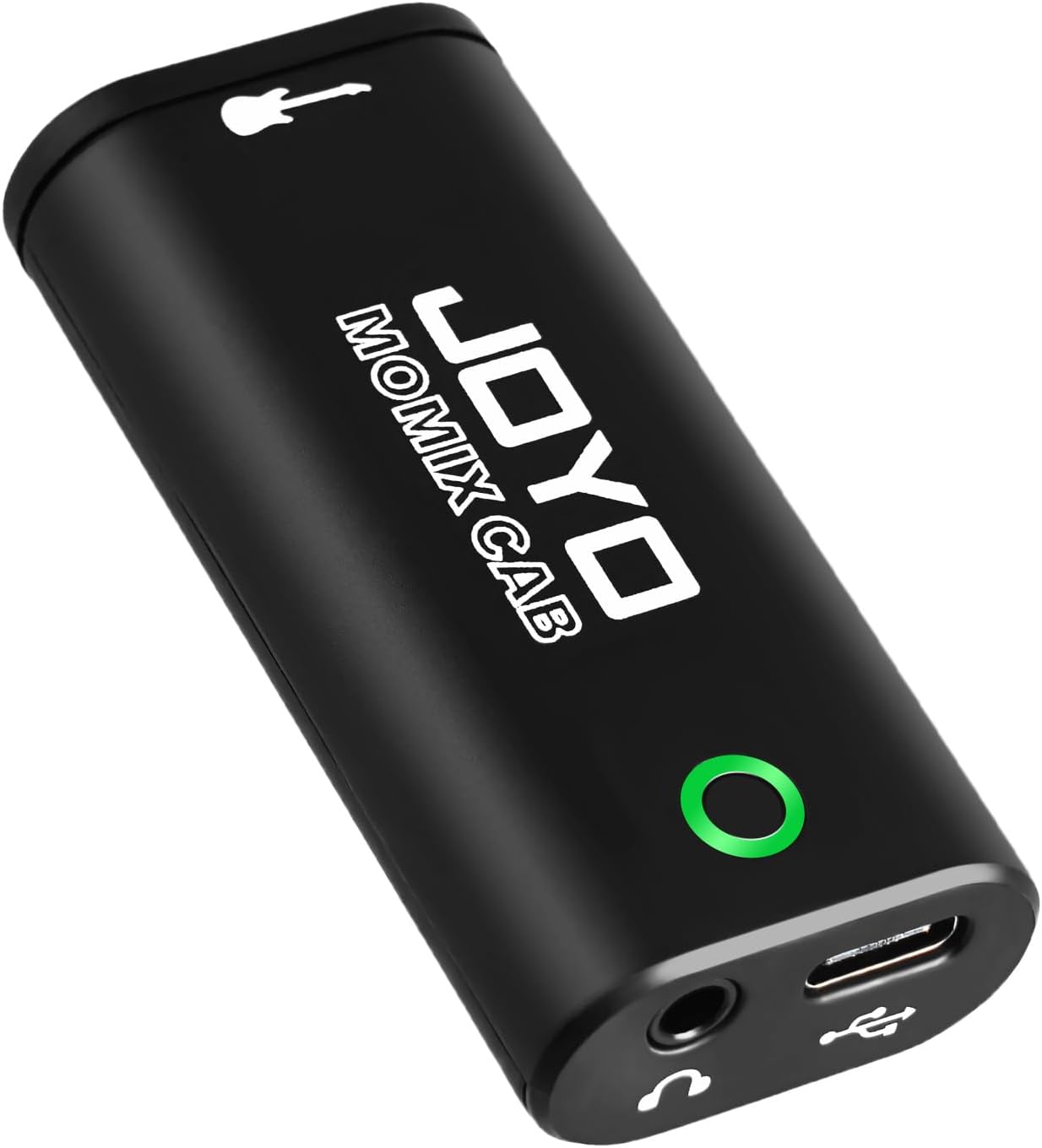
JOYO Guitar Audio Interface (MOMIX CAB)
Pocket-sized, plugs into USB-C or Lightning, 6.35mm instrument input, direct monitoring through a 3.5mm headphone out
No XLR input and no phantom power, so condenser mics and podcast mics are off the table
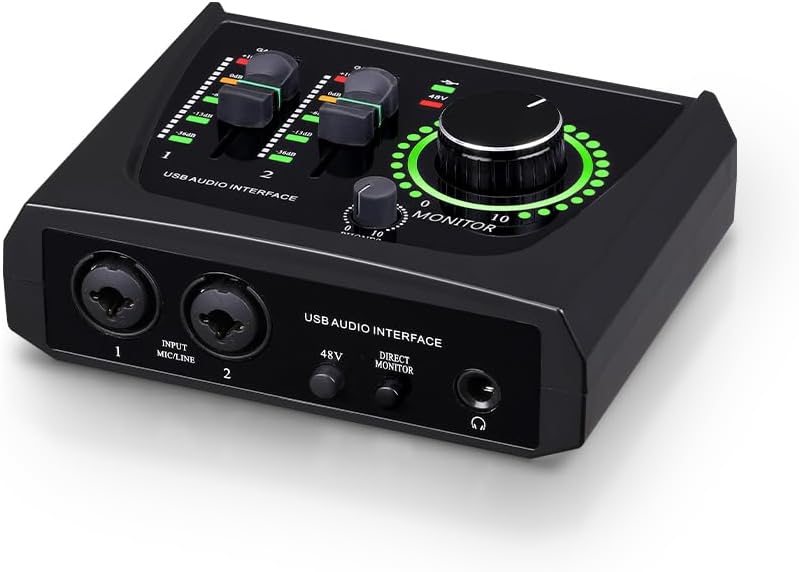
BOMGE mini 2 Channel USB Audio Interface
A real XLR input with 48V phantom power, two channels for a vocal plus a guitar, aimed at streaming and podcasting
"Studio quality" on a budget box is marketing language, and driver stability on your operating system is the thing to verify before you commit
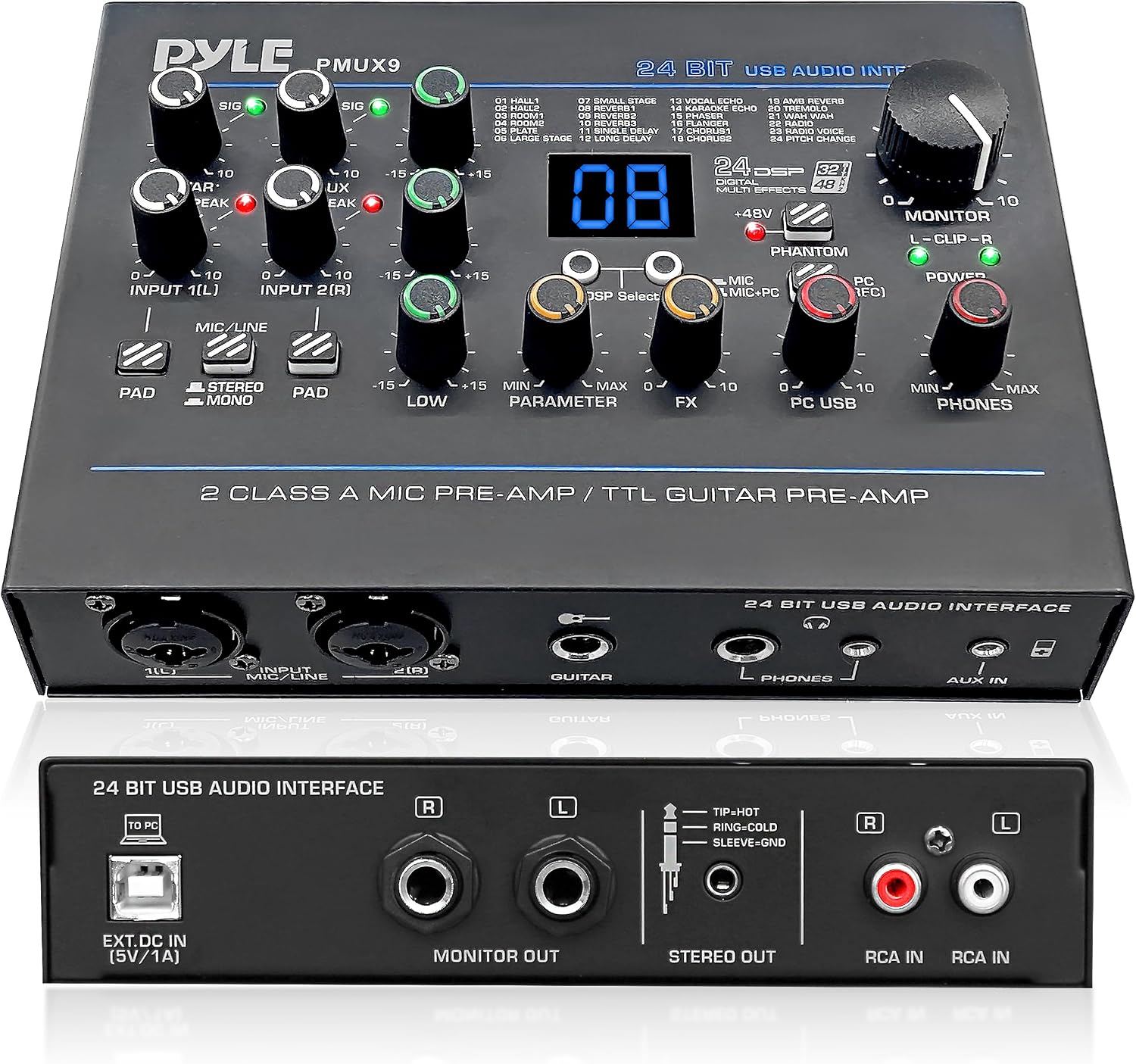
Pyle PMUX9 USB Audio Interface
The widest connector set of the affordable three: mic, line, guitar, stereo AUX and RCA inputs, plus multiple outputs and onboard digital effects
Busy feature list, and the effects presets are a bonus rather than a reason to buy
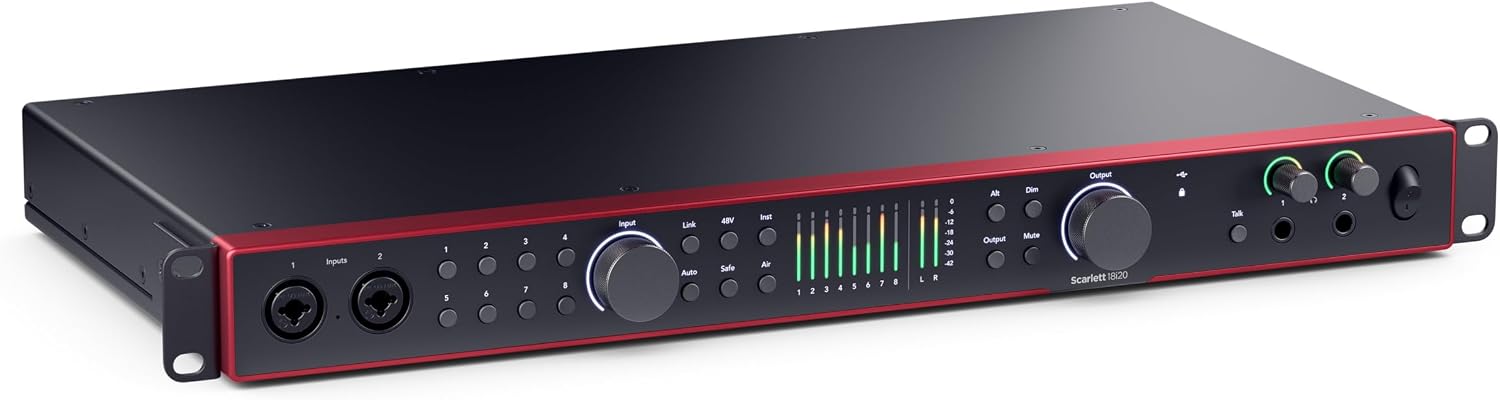
Focusrite Scarlett 18i20 4th Gen USB-C Audio Interface
Rack-sized, USB-C, fourth-generation Scarlett preamps, and enough channels to track a full band or a drum kit
Price and footprint. This is massive overkill for a two-person podcast
Prices and availability were captured from Amazon Creators API and may change.
The four questions I ask before an interface earns a spot
Every interface that comes through my studio gets the same interrogation, and none of it involves the marketing copy on the box.
First, do the preamps stay clean when you push the gain? Two interfaces with identical spec sheets can sound completely different at three o'clock on the dial, and the cheap ones usually get grainy long before they get loud. That matters most with a low-output dynamic mic or a ribbon, where you're asking for 50 dB of clean gain and hoping the noise floor doesn't come with it.
Second, what's the round-trip latency on a mid-range laptop with a real session loaded? That's the spec nobody prints. The chip matters less than the driver, and a great converter behind a badly written driver is a paperweight. Under 10ms is fine. Under 5ms is invisible.
Third, does the headphone amp drive high-impedance cans without clipping? The headphone output is the most ignored part of any interface right up until it distorts on a loud take, and then it's the only spec that matters.
Fourth, would I track a paying client on it? That's a gut check, but it's the one that separates the boxes I keep from the boxes I resell.
The pocket option: JOYO MOMIX CAB
The JOYO is the cheapest and the most single-minded interface in this comparison, and that's a compliment. It's built for one job: getting a guitar into a phone or a computer with as little friction as possible. A 6.35mm instrument input on one side, a 3.5mm headphone output on the other, direct monitoring so you hear yourself without waiting on software, and both USB-C and Lightning so the phone in your pocket already works.
Direct monitoring is the feature that makes this class of interface usable. If you're playing through an amp sim on a phone and your monitoring path goes through the app, you feel every millisecond of it. When the box handles the monitoring itself, the note you play is the note you hear, and the app is just the tone.
The trade-off is hard and it's permanent: there is no XLR input and no phantom power. That means no condenser microphone, no podcast mic, no two-person interview. If you're a guitarist who writes riffs on the couch and wants them recorded before the idea evaporates, this is the right tool. If you're trying to build a home studio around it, you'll hit the wall on day two. Visit on Amazon →
The starter that actually does the job: BOMGE mini
The BOMGE mini is where this comparison turns from "gadget" into "recording setup." It has an XLR input with 48V phantom power, two channels, and it's positioned for recording, streaming, and podcasting. Phantom power is the single most important checkbox on this list, because it's what lets a condenser microphone work. Without it, you're limited to dynamics, and while a good dynamic mic will absolutely carry a podcast, most beginners own a condenser.
Two channels is also the right number for the majority of people. You don't need eight inputs to record a podcast. You need two good ones and a routing plan. Two inputs covers a host plus a guest in the same room, or a vocal plus a guitar tracked at the same time.
The honest criticism: "studio quality" is printed on the box, and it's a phrase I've learned to distrust on anything in this price tier. What actually determines whether this interface works for you is driver behavior. Do your settings survive a reboot, or do you re-select the device every morning? Does the buffer size hold under a load, or does the audio crackle the moment you add a plugin? Those are the questions a spec sheet won't answer, and they're the reason I tell people to buy from a seller with a real return window.
There's one more limitation worth naming. Mix-minus, the routing trick that lets a remote guest hear everything except themselves, isn't a hardware feature on a two-input box. You get there with software routing, and it works fine, but it's a thing you have to set up rather than a button you press. Visit on Amazon →
The connector-heavy middle: Pyle PMUX9
The Pyle sits in the middle of this group and it's the strangest one, in a good way. Where the BOMGE gives you two clean channels and stops, the Pyle piles on inputs: mic and line, guitar, stereo AUX, and RCA, plus phone, stereo, monitor, and headphone outputs, all with phantom power and 24 preset digital effects. It's less a straightforward interface and more a small desktop mixer that happens to talk to a computer, which is exactly what a lot of people who play and record at the same desk actually want.
That I/O count is the real argument for it. If you've got a keyboard, a guitar, and a phone all fighting for a spot, having dedicated connectors means you stop unplugging things mid-session. The RCA and AUX inputs are handy for pulling in a hardware synth or a media player without a pile of adapters.
The honest criticism is twofold. First, a long feature list on a mid-priced box usually means the money went into connectors rather than into the quietest possible preamps, and that's a trade you should make consciously. Second, and this one is important: find out whether the onboard effects print to your recording or only to the monitoring path. If they only affect what you hear, they're a practice tool. If they print, they're a sound-design tool. Those are very different purchases, and the answer changes how you'd use it. Visit on Amazon →
The studio end: Focusrite Scarlett 18i20 4th Gen
Then there's the Scarlett 18i20, and honestly it belongs in a different article. It's a rack-sized, USB-C, fourth-generation Scarlett with enough channels to track a drum kit, a full band, or a session where everyone insists on their own mic. The reason it's in this comparison is that it defines the ceiling: everything above is a compromise, and this is what you buy when you stop compromising.
The Scarlett line's reputation rests on drivers that are boring, which is the highest compliment I can pay an interface. Boring means it shows up in your DAW, it stays at the buffer size you set, and it never becomes the reason a session stopped. Fourth-generation units carry that forward.
The trade-offs are obvious and they're not hidden. The price is in a completely different bracket from the other three, and you're paying for channel count and preamp count as much as anything else. If your show is two people and a microphone, this is the wrong purchase, and I'd say so to your face. But if you're tracking live drums, or you want room to grow into a band without replacing the box in a year, buying once at this level is cheaper than buying three times below it. Visit on Amazon →
Phantom power, bus power, and the gamble nobody mentions
Here's the part that catches people out. USB bus power is fine until it isn't. A hungry condenser microphone drawing 48V phantom power from a flaky laptop port is a genuine gamble, and the failure mode isn't dramatic: it's a mic that works on your desk and hums on the couch, or an interface that drops out the moment the laptop decides to manage power differently.
If you're buying in the BOMGE or Pyle tier and you plan to use a condenser, test it on the machine you'll actually record with, on battery as well as plugged in. And if your machine has USB-C ports that also carry display signals or fast charging, read the manual before assuming the interface plays nicely with a hub.
The same logic applies to headphone amps. A budget interface will drive ordinary earbuds all day. It will struggle with 250-ohm studio cans, and the symptom is a mix that sounds fine to you and thin to everyone else, because you couldn't hear the low end properly while tracking.
Who should buy which
Buy the JOYO if you're a guitarist who writes on a phone and wants the idea captured in the ten seconds before it disappears. It's a practice and songwriting tool, and it's very good at that one job.
Buy the BOMGE mini if you want your first real interface. An XLR input, phantom power, and two channels is the configuration that covers the widest range of beginner needs, from a solo vocal to a two-person show.
Buy the Pyle if your desk is crowded and you want everything plugged in at once, with effects on top. Go in knowing you're buying flexibility rather than the quietest preamps, and confirm how the effects behave in the signal path.
Buy the Focusrite 18i20 if you record bands, drums, or anything that needs more than two microphones at once, and you want the interface to stop being a variable in your sessions.
What I'm testing next
I'm partway through a run of 2026 USB-C interfaces under $300, each with 40 hours of session time behind it, tracked against a ribbon mic and a dynamic mic to see how the budget preamps hold up at high gain. The early read is that the gap between budget and pro is narrowing, mostly in driver quality, which is the least glamorous place to improve and the place that matters most. I'll have full notes when the last unit comes off the bench.
In the meantime, the rule I keep coming back to: the interface is maybe 10% of how your recording sounds. Room, mic placement, and gain staging are the other 90%. Buy the box that gets out of the way, and spend the money you saved on treating the wall behind you.